
After twenty years of working across Australian farming regions – from the Murray-Darling Basin to the Queensland coast – I’ve watched the relationship between climate and food production shift in ways that are no longer subtle. The variability isn’t new. Australian agriculture has always contended with drought and flood. What’s different now is the frequency and intensity of the extremes, combined with a steady creep in baseline conditions that makes planning almost impossible for growers who rely on historical weather patterns.
The most visible pressure point is water. The Murray-Darling Basin, which supplies roughly 40 percent of Australia’s food production, has experienced a sustained decline in inflows over the past two decades. This isn’t a single dry spell that will break. Inflows have dropped structurally, and allocation to agriculture has tightened accordingly. Farmers who once had reliable access to irrigation water now face allocation cuts that force them to choose which paddocks to water and which to leave fallow. The economic ripple is immediate: reduced yields, higher per-unit production costs, and pressure to shift to less water-intensive crops.
Temperature and Growing Season Shifts
Rising temperatures are altering the thermal envelope where certain crops thrive. Wine regions in South Australia and Victoria are experiencing warmer growing seasons that change fruit ripeness timing and sugar accumulation. Some growers have adapted by shifting to warmer-climate varieties or adjusting harvest dates. Others have found that traditional varieties no longer perform as reliably. The shift is gradual enough that it doesn’t trigger sudden crisis, but it’s real enough that agronomists and breeders are actively working on cultivar selection for a warmer future.
Hotter days also mean higher evaporation rates from soil and from plants themselves. A crop that once needed irrigation on a 10-day cycle might now need it every 7 days. That compounds the water shortage problem. In some inland regions, the combination of higher temperatures and lower rainfall has made certain traditional crops – like some varieties of stone fruit – marginal or unviable without significant infrastructure investment.
Rainfall Timing and Reliability
What strikes me most is not just the total rainfall, but when it falls. Spring rains that used to arrive reliably in September and October now come later or not at all. This matters enormously for crop establishment. A cereal crop planted into dry soil, waiting for rain that doesn’t arrive for weeks, faces stress from the moment it germinates. Pasture growth, which underpins livestock production across much of Australia, is tightly linked to spring moisture. Delayed or failed spring rains cascade through the entire pastoral system.
Autumn rainfall has become more erratic as well. Some years bring intense downpours that cause flooding and waterlogging; other years see almost nothing. This unpredictability makes it harder to plan rotations, prepare soil, or time planting. A farmer who might have planted winter crops based on a 30-year average autumn rainfall pattern now has to hedge against a much wider range of outcomes.
Regional Impacts and Crop Suitability
Different regions are experiencing different pressures. The southwest of Western Australia has seen a long-term decline in rainfall, particularly in winter months, which has forced a shift toward more drought-tolerant crops and varieties. The tropical north faces more intense cyclone activity in some years, with longer dry spells in between. The tablelands of New South Wales and Victoria are seeing both temperature increases and moisture stress, which affects cool-season crops like potatoes and berries.
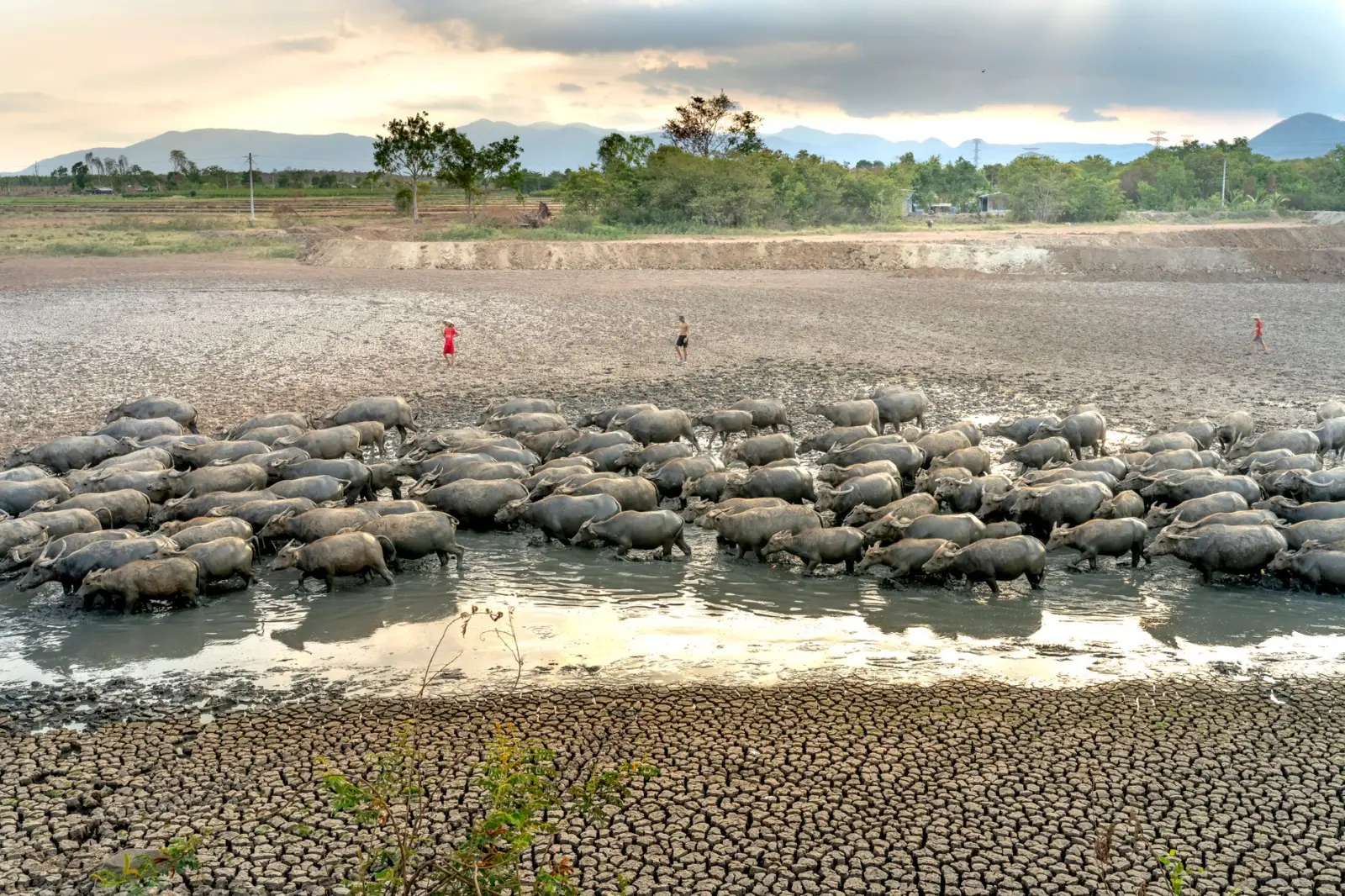
Livestock producers are contending with their own set of challenges. Extended droughts reduce pasture availability and force early destocking or expensive supplementary feeding. Heat stress in cattle and sheep reduces productivity and reproduction rates. Some pastoral regions that were viable for certain livestock enterprises are becoming marginal. This drives consolidation and forces producers to either invest in irrigation or shift to hardier stock or different enterprises altogether.
Pest and Disease Pressure
Warmer winters mean that certain pests and diseases that used to be killed off by frost now overwinter and establish populations in regions where they were previously absent. Fruit flies, for instance, are expanding their range southward. Fungal diseases that thrive in warm, wet conditions are appearing in areas that historically had drier springs and summers. This isn’t just a minor annoyance – it requires new pest management strategies, sometimes new chemicals, and always more monitoring and vigilance.
I’ve seen growers who didn’t anticipate a pest pressure because it wasn’t historically present in their region suddenly face crop losses or quality downgrades. The cost of managing a newly established pest is often higher than preventing its establishment in the first place, but by the time the problem is obvious, prevention is no longer an option.
Adaptation and the Cost of Uncertainty
Adaptation is happening, but it’s uneven and often expensive. Some producers are investing in more efficient irrigation systems, soil moisture monitoring, or rainwater harvesting. Others are diversifying into crops or livestock that are less sensitive to the current climate trajectory. A few are experimenting with perennial crops or agroforestry systems that might provide more resilience. These moves make sense, but they require capital, knowledge, and often a willingness to accept lower returns during a transition period.
The real challenge isn’t identifying what needs to change. It’s the cost and risk of change, combined with the uncertainty about what conditions will actually look like in 10 or 20 years. A farmer who invests in a new irrigation system or replants an orchard is making a bet on future conditions based on incomplete information. Some bets pay off. Others don’t.
What I’ve observed is that the producers managing best are those who are building flexibility into their systems. They’re not betting everything on a single crop or a single strategy. They’re monitoring their soil, their water, their pests, and their market options more closely. They’re talking to agronomists and researchers about what’s working in similar regions. And they’re accepting that the operating environment is more uncertain than it used to be, which means planning needs to be more adaptive and less rigid.
Food security in Australia isn’t in immediate crisis, but it’s under genuine stress. The productive capacity is still there, but the conditions under which that capacity can be reliably deployed are becoming less predictable. That matters for farmers trying to make a living, for regional economies that depend on agriculture, and for consumers who expect consistent food supply. The next decade will be defined less by whether Australian agriculture can adapt, and more by how quickly and at what cost that adaptation happens.