
I’ve spent enough time in small backyards to know that most people treat them like afterthoughts. A modest yard gets squeezed between a fence line and a deck, and then it sits there – underused, vaguely frustrating, occasionally mowed. The problem isn’t the size. It’s that nobody has actually decided what the space is supposed to do.
The yards that work are the ones where someone made a real choice about function. Not a Pinterest choice. A real one. That means understanding what your household actually does outdoors, then building around that instead of around what looks nice in a photo.
Start by watching your own yard for a few weeks. Where do people naturally stand when they come outside? Where do they linger? If you have kids, where do they play? If you have pets, where do they run? These patterns tell you more than any design magazine ever will. I’ve seen plenty of beautiful small yards that nobody uses because the layout fights against how the family actually lives.
Removing What Doesn’t Earn Its Space
This is where most small-yard improvements actually begin, though people rarely think of it this way. Every object in a tight space is taking real estate from something else. A decorative planter that nobody waters, a bench that catches rain and never dries, a fire pit that gets used twice a year – these things accumulate and create clutter that makes the yard feel smaller than it is.
I’ve found that people hold onto outdoor furniture and features out of guilt or optimism rather than actual use. They bought it, so they keep it. Or they imagine using it more than they do. In a small yard, this is a luxury you can’t afford. If something isn’t actively serving a purpose at least a few times a month, it’s taking up oxygen. Remove it. The space itself becomes the amenity once you clear away the noise.
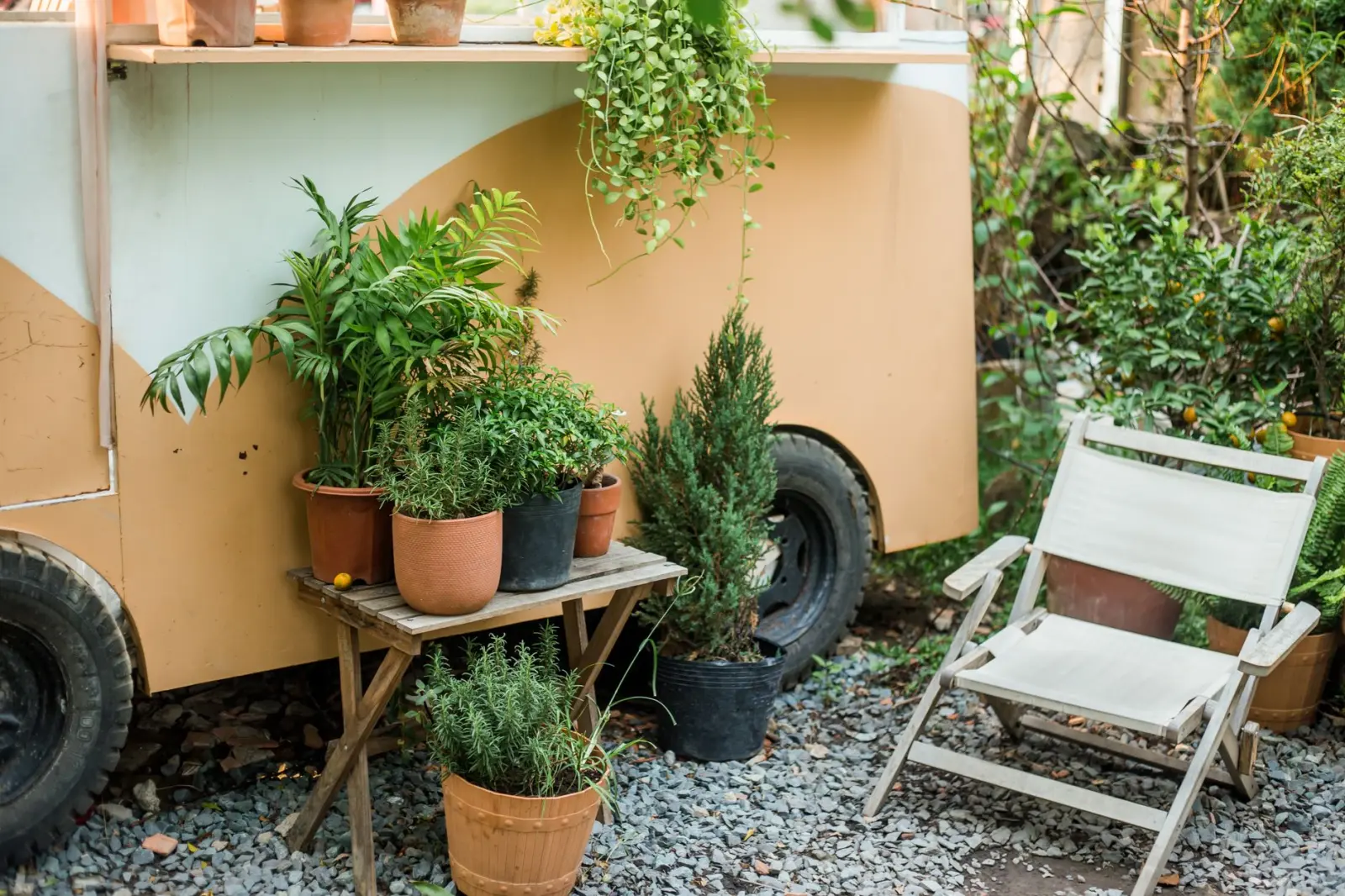
This doesn’t mean a bare yard. It means intentional. A single well-placed seating area that actually gets used beats three mediocre ones. A small herb garden that you harvest from beats decorative plantings that just sit there. One good grill or outdoor prep surface beats a cluttered collection of gadgets.
Vertical Space Changes the Math
Once you’ve cleared the clutter, you can actually see what you’re working with. Most small yards are neglecting their vertical dimension entirely. Walls, fences, and even the airspace above ground level are free real estate that people ignore.
Climbing plants on a fence aren’t just pretty – they create a sense of enclosure and privacy that makes a small yard feel less exposed. Shade structures overhead (pergolas, shade cloth, even a well-placed tree) don’t just provide relief on hot days; they create distinct zones that make the space feel larger and more intentional. Wall-mounted storage, shelving, or even a small water feature takes pressure off the ground plane.
I’ve seen small yards transform just by adding height. A fence that’s bare looks like a boundary. A fence with climbing vines and a trellis becomes a backdrop. An open yard with no overhead coverage feels exposed and harsh. Add a shade structure, and suddenly you have a room.
Pathways and Flow Matter More Than You’d Think
In a tight space, how people move through it determines whether it feels functional or cramped. A yard where you have to weave between obstacles or squeeze past furniture feels smaller and more frustrating than it actually is. A yard where there’s a clear path – even a simple one – feels more organized and usable.
This doesn’t require a formal walkway. Sometimes it’s just maintaining a natural line of travel from the house to the back fence, keeping that corridor clear. Other times it’s a simple stepping-stone path or a strip of pavers that defines movement and prevents people from trampling plants or creating muddy shortcuts.
I’ve noticed that yards with good flow get used more. People naturally move through them differently. They’re more likely to step outside for a few minutes, to use the space for something quick, because it doesn’t feel like an obstacle course.
Zoning Without Walls
Small yards benefit enormously from subtle zoning – creating distinct areas for different functions without building walls or creating visual chaos. This might mean a seating area in one corner, a small garden bed in another, a play zone for kids in a third. The zones don’t need to be separated by physical barriers. Subtle shifts in elevation, paving material, or planting can define them.
The reason this works is psychological as much as practical. A small yard that feels like one undifferentiated space reads as cramped. A small yard divided into two or three purposeful zones reads as intentional and organized. You’re not actually adding square footage, but you’re making the existing space feel more functional.
I’ve also found that zoning helps with maintenance. When areas have defined purposes, people are more likely to maintain them. A corner designated for seating gets kept clear. A garden bed stays planted. An open play area stays open. Without that clarity, small yards tend to become catch-alls where everything gets a little neglected.
Water and Drainage Deserve Attention
This is practical stuff that gets overlooked in design conversations. A small yard with poor drainage becomes unusable after rain. Soggy ground, standing water, mud – these problems hit small spaces harder because there’s nowhere for water to go. If your yard stays wet for days after rain, you need to address that before you do anything else.
Sometimes it’s as simple as grading – sloping the ground slightly away from structures so water runs off naturally. Sometimes you need a rain garden or a small dry well. Sometimes it’s just adding permeable paving instead of solid concrete, which lets water soak through instead of pooling.
I’ve seen small yards come alive once drainage was fixed because people could actually use them in spring and after storms. It’s not glamorous work, but it determines whether your space is functional year-round or just in dry spells.
The real shift in making a small backyard work happens when you stop thinking about it as a miniature version of a large yard. It’s not. It’s a different animal entirely. It requires clarity about what you actually need, restraint about what you keep, and attention to the bones of the space – flow, drainage, vertical dimension, and light. When those things are right, a small yard can be more useful than a sprawling one that nobody knows how to navigate.