
After years of working with homeowners on solar installations, I’ve noticed that most people approach system sizing with incomplete information. They either focus too narrowly on their current electric bill or they get caught up in maximizing the number of panels their roof can physically hold. Neither approach tends to work out well. The reality is that sizing a solar system requires balancing three separate but interconnected factors: your actual energy consumption, the physical constraints of your roof and property, and the financial reality of what makes sense for your household.
The first thing I always look at is the home’s annual electricity usage. This is straightforward enough – you can pull it from your utility bills – but most people don’t dig deep enough. They look at their current bill and assume that’s representative. What I’ve learned is that usage patterns shift. A family that runs minimal air conditioning in summer might install solar and then buy a second refrigerator for the garage. A home office that didn’t exist five years ago now runs 24/7. Someone retires and starts spending more time at home. These aren’t dramatic changes, but they add up. I typically recommend looking at a full 12 months of bills, not just the most recent one, and then adding a modest buffer – usually 10 to 15 percent – for the life changes that are likely to happen over the next decade.
Understanding Your Roof’s Real Capacity
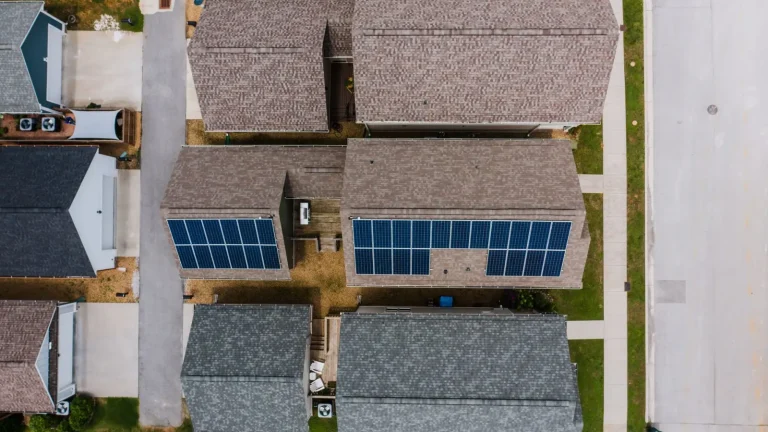
The physical side of sizing is where I see the most miscalculation. A homeowner looks at their roof and thinks about how many panels could theoretically fit, then assumes that’s the target. What they’re not accounting for is orientation, shading, roof age, and structural considerations that aren’t visible from ground level.
South-facing roof space in the Northern Hemisphere is premium real estate for solar. East and west-facing roofs work, but they’re less efficient – you’re looking at roughly 15 to 20 percent less annual production compared to an optimally oriented south-facing array. North-facing panels are essentially wasted unless you have unusual circumstances. I’ve been on roofs where the homeowner was convinced they had plenty of space, but once we factored in setbacks from the ridge and edges, code requirements for roof access, and the need to avoid partial shading from a chimney or vent stack, the usable area was maybe 60 percent of what they initially thought.
Shading is deceptive. A tree that’s 40 feet away might not seem like it would matter, but if it casts a shadow across even a portion of your array during peak sun hours, it can drag down production for the entire system. I’ve learned to be skeptical of shading assessments done on a clear day in summer. You need to think about how shadows move throughout the year. A neighbor’s roof line, a distant hill, even a utility pole two properties over – these things matter more than most people realize.
The Math Between Production and Consumption
Once you know your annual usage and your available roof space, the next step is understanding how much of your consumption you actually want to offset with solar. This is where the financial and practical sides collide.
A system sized to cover 100 percent of your annual electricity use sounds ideal, but it often isn’t. In most climates, solar production is seasonal. You’ll generate far more electricity in summer than in winter. If you size your system to cover 100 percent of annual usage, you’ll be overproducing significantly during summer months and underproducing during winter. That summer excess either gets sent back to the grid through net metering, or it sits unused if you’re off-grid. The economics of that depend heavily on your utility’s net metering policy. Some utilities credit excess production at retail rates; others credit it at wholesale rates, which can be half as much or less. I’ve seen homeowners install larger systems than necessary because they didn’t understand their local net metering rules.
What I typically recommend is sizing to offset 70 to 85 percent of annual usage for most grid-connected homes. This approach captures the economic sweet spot. You’re reducing your electric bill significantly, but you’re not oversizing the system to chase the last 15 or 20 percent of consumption, which would require either a much larger solar array or battery storage – both of which add substantial cost. You still draw power from the grid on cloudy days and during winter months, which is fine. The grid is there for that purpose.
Roof Age and Structural Realities
Before committing to a system size, I always ask about roof age. If your roof is 15 years old and has another 5 years of life left, installing a 25-year solar system on top of it is a problem. You’ll eventually have to remove the panels to replace the roof, which is expensive and disruptive. I’ve recommended smaller systems or even advised people to replace their roof first, then go solar. It seems counterintuitive – you’re delaying the solar investment – but it’s more cost-effective than dealing with panel removal and reinstallation down the road.
Structural capacity matters too, though it’s often overlooked. A roof that’s perfectly fine for shingles and snow load might not be adequate for the additional weight of solar panels. This isn’t something you can assess by eye. A structural engineer or experienced solar installer needs to evaluate the framing, and occasionally reinforcement is needed. That adds cost and complexity, and it’s a legitimate reason to adjust system size downward if the structural work becomes prohibitively expensive.
I’ve also encountered situations where a homeowner’s property has easements or deed restrictions that limit where panels can be placed. A view corridor, a historic district overlay, or an HOA rule can shrink your available roof space considerably. These constraints don’t change your energy needs, but they do limit your options for meeting them. Sometimes that means a smaller system than ideal, or it means exploring ground-mounted arrays if you have the land.
Budget Reality and Payback
The final piece is financial. Solar systems have come down in cost significantly over the past decade, but they’re still a substantial investment. A typical residential system in the 5 to 8 kilowatt range runs anywhere from $10,000 to $20,000 after accounting for labor, permits, and equipment. Federal tax credits and state incentives help, but the net out-of-pocket cost is still meaningful for most households.
I’ve found that homeowners benefit from thinking about payback period rather than just monthly payment. If your system costs $15,000 and saves you $1,500 per year in electricity costs, that’s a 10-year payback. That’s reasonable if you plan to stay in the home for 15 or 20 years. If you’re planning to move in five years, the math looks different. Similarly, if you’re financing the system through a loan, the interest rate matters enormously. A system that makes sense at 3 percent financing might not make sense at 8 percent.
Oversizing a system to chase maximum production rarely improves the financial picture. It increases upfront cost, and unless your utility offers excellent net metering rates, the excess production doesn’t translate to proportional savings. Undersizing is a different problem – you end up drawing more power from the grid than necessary, missing out on savings you could have captured. The right size is the one that balances your consumption, your roof capacity, your local climate and shading, and your budget. That’s rarely the maximum size your roof can hold, and it’s rarely the minimum size that technically works.