
After decades of working with building systems and infrastructure across Australia, I’ve watched the relationship between climate conditions and structural integrity shift noticeably. It’s not always dramatic or sudden. More often, it’s a slow accumulation of stress that shows up in places most people don’t think about until something stops working.
The infrastructure we built in the 1970s and 1980s was designed for a narrower band of conditions than we’re now experiencing. Concrete, asphalt, timber, steel – all of these materials have known performance windows. When conditions drift outside those windows consistently, failure modes change. They accelerate. And in a country as large and dispersed as Australia, the financial and logistical consequences compound quickly.
What I’ve observed isn’t a single failure point, but rather a widening range of stresses hitting different systems simultaneously. Roads crack differently now. Drainage systems that once handled seasonal peaks are overwhelmed by intensity. Timber in exposed locations degrades faster. Coastal properties face erosion patterns that historical records didn’t predict. These aren’t isolated incidents – they’re becoming the norm in many regions.
Thermal Stress on Pavement and Concrete
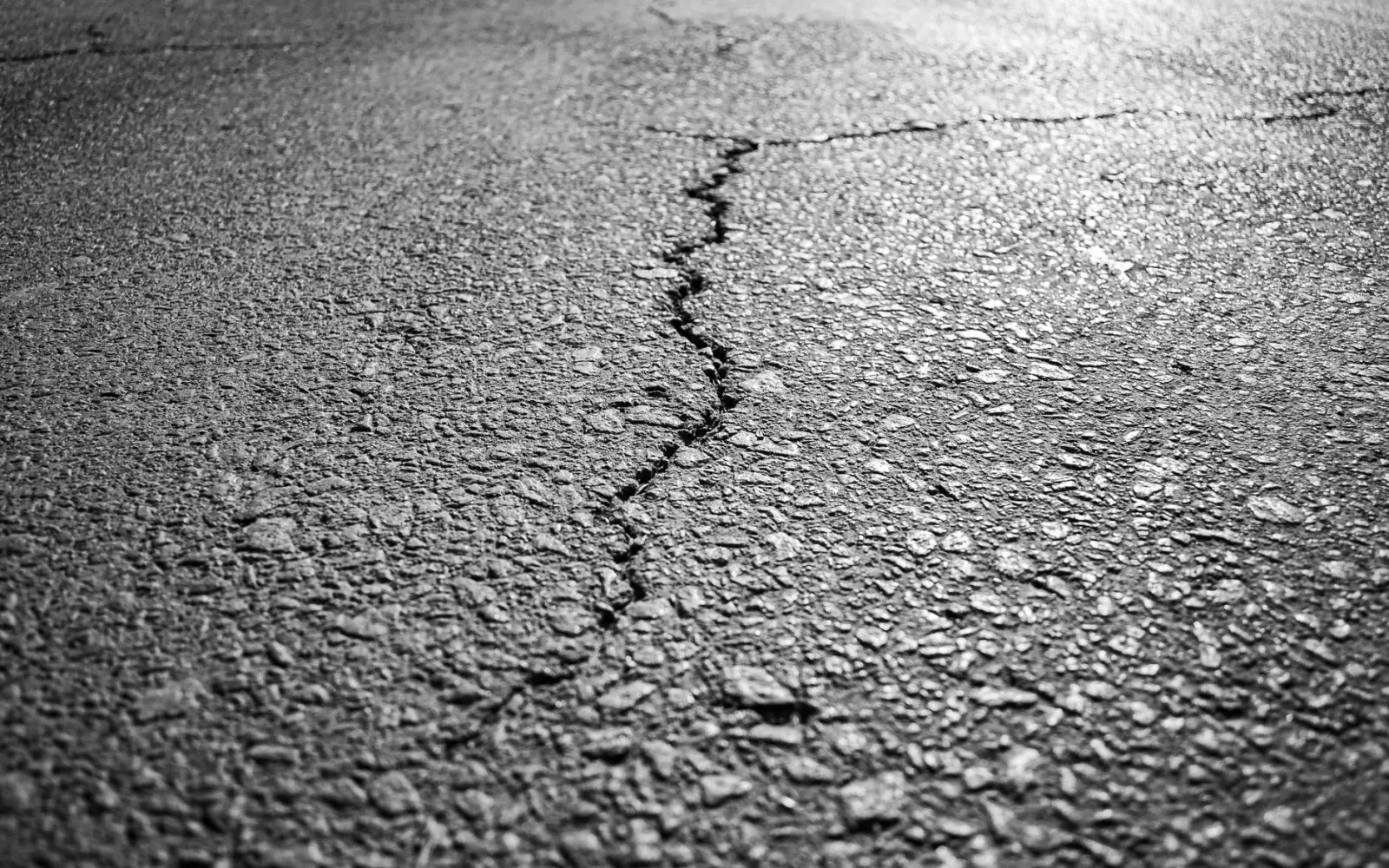
Asphalt and concrete roads expand and contract with temperature. This is basic material science, but the magnitude of daily and seasonal temperature swings is what determines how much stress the material absorbs. Over the past 15 years, I’ve seen pavement failure patterns shift. Roads that held up reliably through previous decades now show rutting, cracking, and surface delamination earlier than expected.
The problem compounds because we’re not just seeing higher peak temperatures. We’re seeing faster temperature changes – hot days followed by cooler nights, or sudden drops after heat waves. Concrete slabs develop internal stress from these rapid transitions. The surface heats and expands while the interior remains cooler, creating differential stress. Repeat this cycle hundreds of times per year, and the material fatigues. Hairline cracks appear, water infiltrates, and deterioration accelerates.
In inland regions, I’ve observed that roads requiring resurfacing every 12 – 15 years are now needing it every 8 – 10 years. Local councils are struggling with the cost implications. Maintenance budgets that were calculated on historical wear rates are now insufficient. The problem isn’t that roads are built poorly – it’s that the environmental conditions they’re subjected to have changed beyond their design assumptions.
Drainage and Stormwater Systems Under Pressure
Most Australian drainage infrastructure was sized based on historical rainfall patterns. A 50-year storm event was defined by records going back 50 years. But the intensity of rainfall events has shifted. We’re seeing what would have been considered extreme rainfall occur more frequently in some regions. Drainage systems designed to handle a certain volume are now regularly overwhelmed.
This shows up in basements and low-lying residential areas first. Stormwater pipes that drain a neighborhood were calculated for peak flows based on past data. When a single rainfall event exceeds that design capacity, water has nowhere to go. It backs up into properties, damages foundations, and floods utility spaces. I’ve worked on homes where this has happened twice in five years – something that would have been virtually unheard of 20 years ago.
The infrastructure isn’t failing catastrophically in most cases. It’s simply being asked to handle conditions it wasn’t built for. Upgrading these systems is expensive and disruptive. Councils often can’t justify the cost based on a single event, but the frequency is increasing. What was once a rare emergency is becoming a predictable seasonal risk in some areas.
Coastal Infrastructure and Accelerating Erosion
Coastal erosion is perhaps the most visible climate-related infrastructure challenge. Sea level rise is measurable, but it’s not the only factor. Storm surge intensity has changed. Wave energy patterns have shifted. Beaches that were stable for decades are now eroding noticeably year to year. I’ve seen residential properties that were considered safely set back from the shoreline 15 years ago now within striking distance of the water.
The infrastructure affected isn’t just seawalls and breakwaters. It’s roads that run parallel to the coast, underground utilities, stormwater outlets, and the foundations of buildings. When erosion accelerates, these systems are exposed and compromised. A road that was 50 meters from the cliff edge becomes 30 meters away. Maintenance access becomes difficult. Eventually, the infrastructure has to be relocated or abandoned.
What complicates this further is that erosion isn’t uniform. Some stretches of coast are stable while nearby sections are actively retreating. Local geology, wave exposure, and sediment dynamics all play a role. This means infrastructure planning has to account for localized risk rather than broad regional assumptions. It’s more complex and more expensive to manage.
Timber Deterioration and Moisture Dynamics
Timber in exposed locations – whether it’s structural framing in older homes, utility poles, or outdoor infrastructure – is experiencing different decay patterns. Higher temperatures accelerate biological activity. More intense rainfall events mean timber is exposed to saturation cycles that are more extreme. Timber that was designed to tolerate seasonal wetting and drying is now experiencing more aggressive moisture cycles.
Termite and fungal activity accelerates in warmer conditions. Pole rot, which was once a gradual process that might take 15 – 20 years, now occurs in 8 – 12 years in some regions. Utility companies are replacing poles more frequently. Older timber-frame houses are showing decay in structural members that were expected to last much longer. Treatment and maintenance intervals that were calculated on historical climate data are no longer sufficient.
This is particularly challenging for heritage properties and older residential stock. Timber framing in homes built in the 1950s and 1960s was never intended to withstand the moisture and temperature extremes now becoming common. Remediation is expensive and often requires specialist work.
Foundation Movement and Soil Behavior
Soil expands and contracts with moisture content. In clay-heavy soils, which are common in many Australian regions, this movement can be significant. Historically, this was a seasonal phenomenon – wet in winter, dry in summer. But climate patterns are becoming more erratic. Extended dry periods followed by intense rainfall create larger moisture swings in the soil profile. This translates to more pronounced foundation movement.
Older homes built on shallow foundations or in areas with reactive soils are particularly vulnerable. I’ve observed cracks in brickwork and concrete slabs that develop over months rather than years. Some are minor and stabilize. Others indicate ongoing movement that suggests structural concern. The unpredictability of soil moisture now makes it harder to distinguish between normal seasonal movement and movement that signals a developing problem.
Underpinning and foundation repair work is increasing in frequency in some regions. The cost and disruption of these repairs is substantial. Prevention through improved drainage and moisture management is critical, but many older properties lack the infrastructure to manage the new moisture dynamics they’re experiencing.
The reality of climate change’s impact on Australian infrastructure isn’t a single catastrophic failure waiting to happen. It’s a gradual degradation of systems that were built within narrower performance windows than we now occupy. Materials fail faster. Drainage systems are overwhelmed more often. Coastal properties face erosion at accelerated rates. Timber decays more quickly. Soil moves more unpredictably. None of these are new phenomena, but their frequency and intensity have shifted in ways that older infrastructure wasn’t designed to handle. Adaptation is happening, but it’s reactive rather than proactive in most cases, and the cost of that reactivity is mounting.