
After years of watching homeowners pour money into renovations, I’ve noticed a consistent pattern: the upgrades that feel most impactful often aren’t the ones that move the energy needle. People tend to fixate on visible, tangible improvements – new windows that gleam, a shiny heat pump system, solar panels on the roof – while overlooking the unglamorous work that actually stops energy from bleeding out of their homes. The gap between perception and reality here is substantial, and it shapes how a renovation budget should be allocated if the goal is genuine energy performance, not just the appearance of sustainability.
The foundation of any serious energy improvement sits in the building envelope. This means insulation, air sealing, and moisture management. I’ve spent enough time in attics and crawl spaces to know that most homes lose far more energy through gaps and poor insulation than through any other single pathway. A house with decent insulation but terrible air sealing will always underperform. Conversely, a well-sealed, well-insulated home with older windows will outperform a leaky house with new triple-glazed windows. The windows get the attention because they’re visible and replaceable. The air leaks around electrical outlets, rim joists, and ductwork don’t. Yet the latter matters more.
Attic and Basement Work Comes First
If I’m advising someone on where to spend first in a renovation, the attic is almost always the answer. Heat rises, and in winter, a poorly insulated attic is where a significant portion of heating energy escapes. The work is straightforward: add insulation to the attic floor, seal air leaks around penetrations, ensure proper ventilation. This is not glamorous. It doesn’t change how the house looks or feels day-to-day in the way a new kitchen does. But the return on investment is real. A homeowner spending two to three thousand dollars on attic work might reduce heating costs by fifteen to twenty percent depending on the starting condition.
Basements and crawl spaces follow similar logic. Many homes have uninsulated or poorly insulated rim joists – the band of wood that sits on top of the foundation wall. This is a thermal bridge that directly connects the heated interior to the cold exterior. Sealing and insulating this area, along with the rim joist itself, stops a meaningful amount of heat loss. If the basement is conditioned space, insulating the walls matters. If it’s unconditioned, focusing on the rim joist and sealing air leaks into the living space above is the priority. Again, this is not work that a visitor will notice or appreciate, but the energy performance improves measurably.
Air Sealing Across the Entire House
Air sealing deserves its own category because it’s often treated as an afterthought rather than a core renovation priority. I’ve seen homes where contractors installed a new furnace and heat pump without addressing the fact that the house is leaking conditioned air through dozens of small gaps. The new equipment works harder to compensate, and the efficiency gains are diminished. Proper air sealing means identifying and closing gaps around windows and doors, sealing ductwork, addressing penetrations where utilities enter the home, and ensuring that the attic and basement are properly isolated from the living space.
The challenge with air sealing is that it’s invisible work. A homeowner can’t point to it and feel satisfied the way they can with a new bathroom. But when done correctly, it reduces the load on heating and cooling systems, extends equipment life, and improves comfort by eliminating drafts. A blower door test can quantify the improvement, which is useful for understanding the actual impact. Without that measurement, many homeowners underestimate how much air leakage they’ve eliminated.
HVAC Systems: Replacement Timing Matters
Heating and cooling systems represent a large capital expense, and the decision of when and what to replace is often driven by failure rather than efficiency optimization. If a furnace is still functioning, replacing it solely for energy savings rarely makes financial sense unless the unit is over twenty years old and the home’s envelope has been significantly improved. However, if replacement is necessary anyway, the choice of what to install becomes critical.
A high-efficiency furnace paired with a leaky house will not perform as well as a standard-efficiency furnace in a well-sealed, well-insulated home. The envelope condition determines how much the equipment can actually help. I’ve seen homeowners install a five-thousand-dollar heat pump system in a home with significant air leaks and poor insulation, only to find that their energy bills barely changed. The equipment was capable, but the house wasn’t ready for it. Conversely, improving the envelope first and then installing efficient equipment yields dramatic results.
Heat pumps deserve particular attention because they’re increasingly common and often misunderstood. In climates where heating is the dominant load, a heat pump can reduce energy consumption significantly compared to a furnace and air conditioner. But in very cold climates, the efficiency advantage diminishes unless the home is well-insulated and the heat pump is properly sized. Installing a heat pump without addressing the envelope is like putting a high-performance engine in a car with a leaky fuel tank. The potential is there, but the results disappoint.
Water Heating and Appliances
Water heating typically accounts for about fifteen to twenty percent of household energy use, making it a legitimate target for improvement. Upgrading from an old electric resistance water heater to a heat pump water heater can cut water heating energy consumption in half. This is a genuine, measurable improvement. However, the payback period depends on local electricity rates and the condition of the existing system. In some regions, the savings justify the higher upfront cost within seven to ten years. In others, it takes longer.
Other appliances – refrigerators, washers, dryers – have become more efficient over time, but the energy savings from replacement alone are modest unless the existing appliances are very old. A thirty-year-old refrigerator uses significantly more energy than a modern one, but a ten-year-old refrigerator doesn’t. The decision to replace should be based on failure or near-failure rather than efficiency alone, unless the home is undergoing a major renovation and the appliances are already being replaced for other reasons.
Windows and Doors: A Nuanced Reality
Windows are where perception and reality diverge most sharply. New windows look better, operate smoothly, and feel like a meaningful upgrade. The energy performance improvement, however, is often smaller than homeowners expect. In a well-sealed, well-insulated home, replacing single-pane windows with modern double-pane windows might reduce heating and cooling costs by five to ten percent. If the home is drafty and poorly insulated, the improvement is even smaller because the windows aren’t the primary source of energy loss.
This doesn’t mean windows are never worth replacing. If they’re failing – seals are broken, operation is difficult, condensation is persistent – replacement makes sense. But replacing windows as an energy efficiency measure in isolation, without addressing the envelope, is often a poor use of renovation funds. The same money spent on insulation and air sealing will yield a larger energy improvement. I’ve seen homeowners spend fifteen thousand dollars on windows and realize a two-hundred-dollar annual savings. I’ve also seen them spend five thousand dollars on attic insulation and air sealing and realize a fifteen-hundred-dollar annual savings.
Solar and Renewable Energy
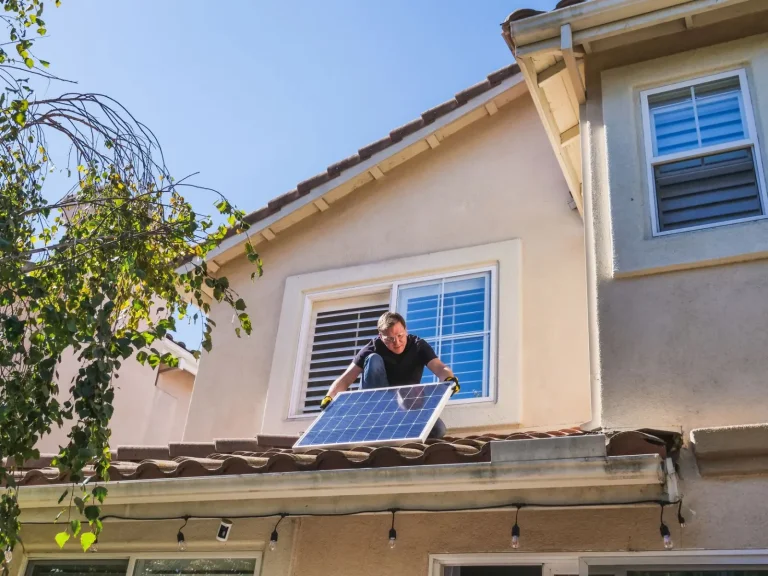
Solar panels are the most visible renewable energy option, and they’re increasingly affordable. However, installing solar on a home with a poor envelope is inefficient. The house uses more energy than it should, so the solar system needs to be larger and more expensive to offset that consumption. The sequence matters: improve the envelope first, reduce the actual energy demand, then install solar to cover the remaining load. A five-kilowatt solar system on a well-insulated, air-sealed home will offset more of the annual energy use than the same system on a leaky, poorly insulated home.
This principle applies to any renewable energy investment. The most cost-effective renewable energy is the energy you don’t use in the first place. A dollar spent on insulation or air sealing will prevent more energy waste than a dollar spent on solar panels if the envelope is the limiting factor. Once the envelope is optimized, renewable energy becomes the logical next step.
The reality of sustainable renovation is that the most impactful work is often the least visible. Attic insulation, air sealing, and envelope improvements don’t generate excitement or social media moments. They don’t transform the aesthetic of a home. But they deliver measurable, consistent energy savings that compound over years. Equipment upgrades and renewable energy systems are valuable, but they’re most effective when the foundation – the building envelope – is solid. A renovation budget allocated with this priority in mind will yield better energy performance and a better return on investment than one that prioritizes visible upgrades.