
After years of working with homeowners installing solar panels and small wind systems, I’ve noticed the same tension emerge repeatedly: the desire to generate clean energy bumps directly against the reality of living on a finite piece of land. It’s not a simple trade-off. The math looks straightforward on paper – a 5-kilowatt solar array or a small turbine can meaningfully reduce grid dependence – but the actual installation involves decisions about roof orientation, ground space, sight lines, equipment access, and future flexibility. Most people don’t anticipate how these choices ripple through daily life and property value.
The core challenge isn’t whether renewable energy belongs on residential property. It’s where, how much, and what you’re willing to give up in return. I’ve seen installations that work beautifully because the homeowner thought through these trade-offs early. I’ve also seen systems that generate power efficiently but create problems that outweigh the benefits: blocked views, restricted yard use, noise complaints from neighbors, or equipment that becomes impossible to maintain without disrupting the rest of the property.
Ground-Mounted Solar vs. Rooftop Reality
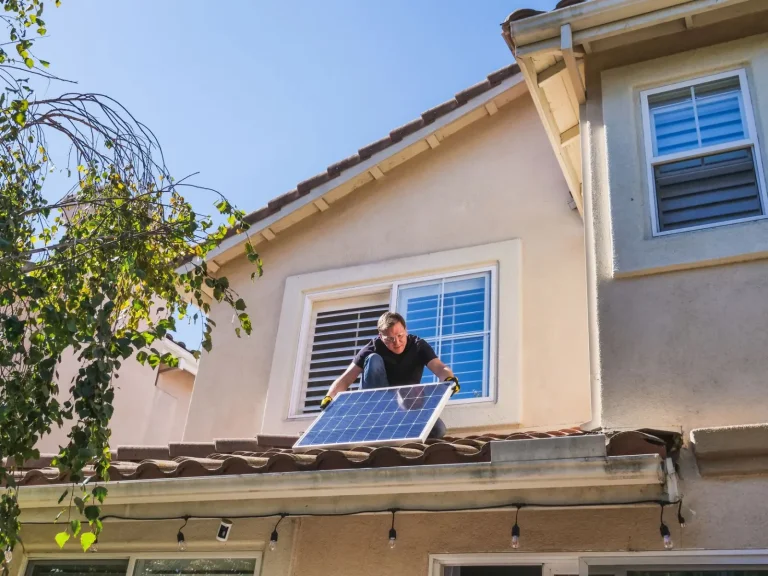
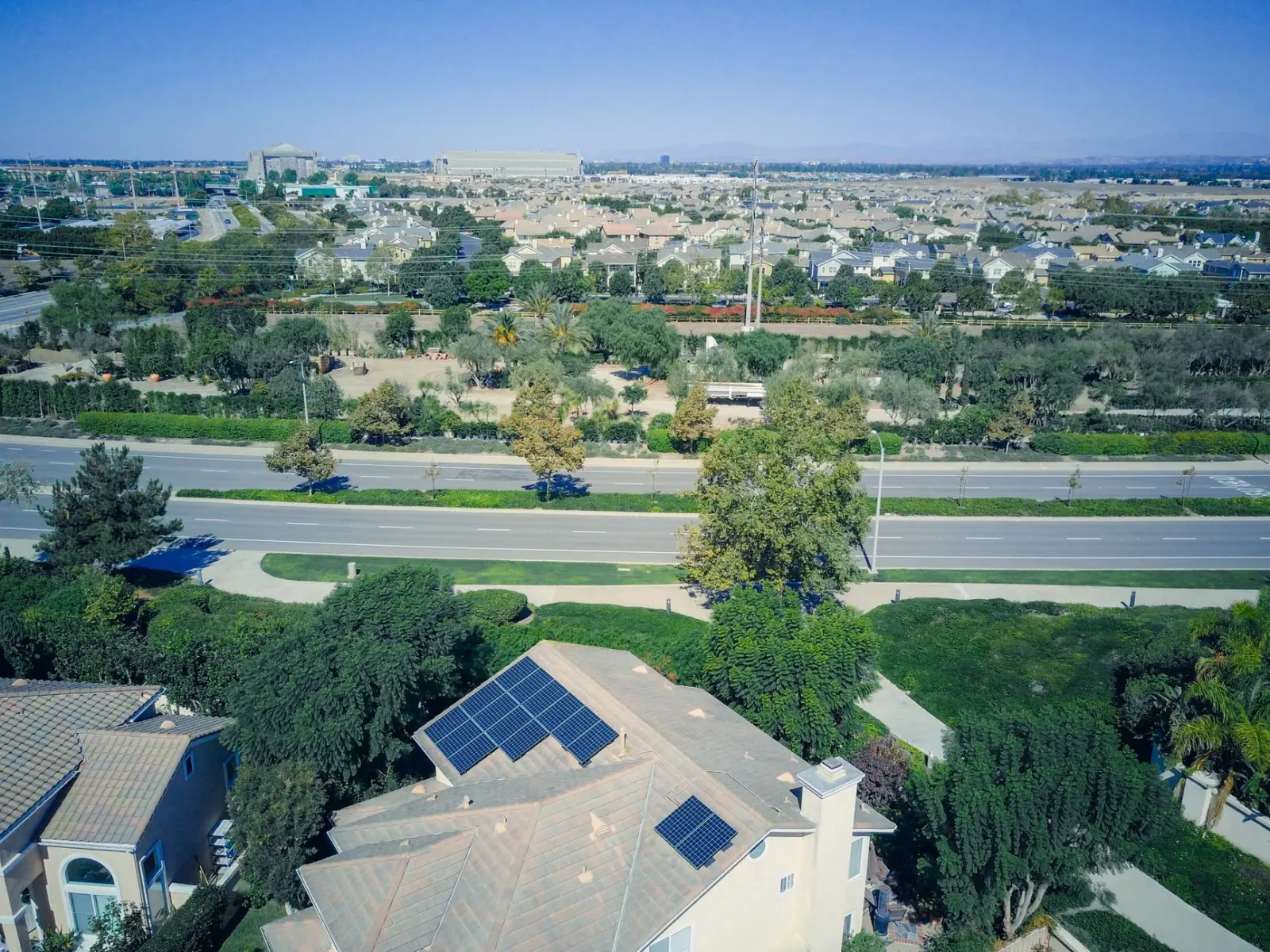
Most homeowners assume solar panels belong on the roof. It’s the obvious choice – the surface is already there, it’s elevated and unshaded, and it doesn’t consume usable land. In practice, this works well for many properties. But I’ve encountered situations where rooftop installation creates genuine problems that a ground-mounted system would have solved.
A pitched roof facing the wrong direction, a roof that needs replacement in ten years, or a home surrounded by mature trees that will eventually shade the panels – these aren’t deal-breakers, but they require honest assessment. Roof-mounted systems are harder to maintain. Cleaning them safely is a hassle. If you need to replace roofing material, the panels come down first, adding labor and cost. And if your roof structure isn’t robust enough, reinforcement becomes expensive quickly.
Ground-mounted systems, by contrast, sit at eye level or slightly higher on a cleared patch of yard. They’re accessible for cleaning and maintenance. They can be positioned to track the sun’s seasonal angle. But they consume usable land. A 5-kilowatt system needs roughly 300 to 400 square feet of space, depending on panel efficiency and tilt angle. For a quarter-acre lot, that’s a meaningful chunk of yard. For a half-acre property with existing gardens, a play area, or space you want to keep open, it becomes a real negotiation with yourself about priorities.
Wind Systems and the Neighbor Question
Small wind turbines – typically 5 to 15 kilowatts for residential use – are less common than solar, but they appear on properties with good wind exposure. The physics are compelling: a small turbine can generate as much energy as a larger solar array in a windy location, using far less space. The problems are equally real.
Wind turbines make noise. Not deafening noise, but a persistent low hum or swishing sound that carries farther than most people expect, especially at night when ambient sound drops. I’ve been on properties where a well-installed turbine is barely noticeable from the homeowner’s house but clearly audible 200 feet away. Zoning codes in many areas restrict turbine height to 35 or 50 feet on residential land, which limits wind resource capture. Taller towers work better, but they’re more visible, more regulated, and more likely to trigger neighbor complaints.
The setback requirements are strict in most jurisdictions. A turbine typically needs to be positioned at a distance from property lines equal to its total height – so a 40-foot tower needs a 40-foot setback. On a small lot, that leaves few viable locations. And unlike solar panels, which are static and visually consistent, a turbine is a moving object. It catches the eye. Some neighbors accept it without issue. Others find it intrusive or worry about property values, regardless of whether those concerns are justified.
The Shade and Sight-Line Problem
This is something I’ve seen cause genuine regret. A homeowner installs a ground-mounted solar array on the south side of their property to maximize sun exposure. Five years later, they realize the array blocks the view from their back patio, or it casts a shadow across a garden bed during the afternoon, or it’s directly in the sight line from the kitchen window. None of these issues prevent the system from working, but they erode daily satisfaction with the property.
Rooftop systems have their own sight-line complications. A home visible from the street with panels on the front-facing roof changes the property’s appearance permanently. Some people don’t mind. Others feel the visual impact is significant enough that they’d rather use less efficient roof space on the back side of the house, even if it means lower energy generation.
The lesson I’ve drawn from repeated installations is that “optimal” energy production and “optimal” land use are often in conflict. A solar array angled at the perfect pitch and oriented due south generates more power than one tilted at a compromise angle or facing slightly southeast. But the compromise angle might position the array in a less visible location, or it might allow you to retain use of a portion of your yard. The choice depends on what matters more to you – maximizing generation or preserving other aspects of your property.
Maintenance Access and Future Flexibility
I’ve worked on properties where the original installation was well-designed for energy production but poor for long-term maintenance. A ground-mounted array positioned too close to a fence, under an overhanging branch, or in a corner that’s hard to reach with a ladder becomes frustrating to clean and inspect. A rooftop system installed without adequate clearance to the roof edge makes it risky to walk around for repairs.
Future flexibility matters more than most people anticipate. A homeowner might install a 5-kilowatt system expecting to stay in the home for 20 years. But life changes. They might want to add a second array, expand the system, or remove it entirely if they sell the property. Ground-mounted systems can be repositioned or expanded if you have available land. Rooftop systems are locked into the roof’s geometry. If you later want to upgrade, you’re often replacing the entire array rather than adding to it.
Battery storage is another consideration that affects land use. A home battery system – whether lithium-ion or another chemistry – requires indoor space or a weatherproof enclosure. That’s typically a garage corner, a utility room, or a small shed. If your property is already tight for storage, adding renewable energy infrastructure means finding space for the battery as well as the generation equipment.
Property Lines and Zoning Reality
Renewable energy systems exist within legal and regulatory frameworks that vary significantly by location. Some municipalities have streamlined permitting for residential solar. Others require extensive documentation. Wind systems face stricter scrutiny almost everywhere. Setback requirements, height restrictions, and noise ordinances differ by jurisdiction and sometimes even by neighborhood.
I’ve seen installations delayed or redesigned because the homeowner didn’t research local requirements early enough. A system that would work perfectly on the property might violate a height restriction or setback rule. Sometimes the solution is straightforward – reposition the array or choose a shorter turbine tower. Sometimes it means accepting a less optimal configuration or deciding the project isn’t feasible.
Shared property lines add complexity. A system on one property can affect a neighbor’s view, shade, or noise environment. Good neighbor relations matter more than any technical consideration. I’ve seen installations proceed smoothly because the homeowner involved neighbors early and addressed concerns genuinely. I’ve also seen resentment build when a system was installed without warning or consultation, even if it technically complied with all regulations.
The balance between renewable energy and land use isn’t a problem with a universal solution. It’s a series of specific choices made within the constraints of your property, your local regulations, your energy goals, and your willingness to accept trade-offs. The homeowners I’ve worked with who felt satisfied with their installations were those who spent time thinking through these trade-offs before committing to a design. They understood what they were gaining in energy independence and what they were giving up in land use, aesthetics, or convenience. That clarity – not the technical specifications of the equipment – tends to determine whether an installation feels like a good decision five years later.