
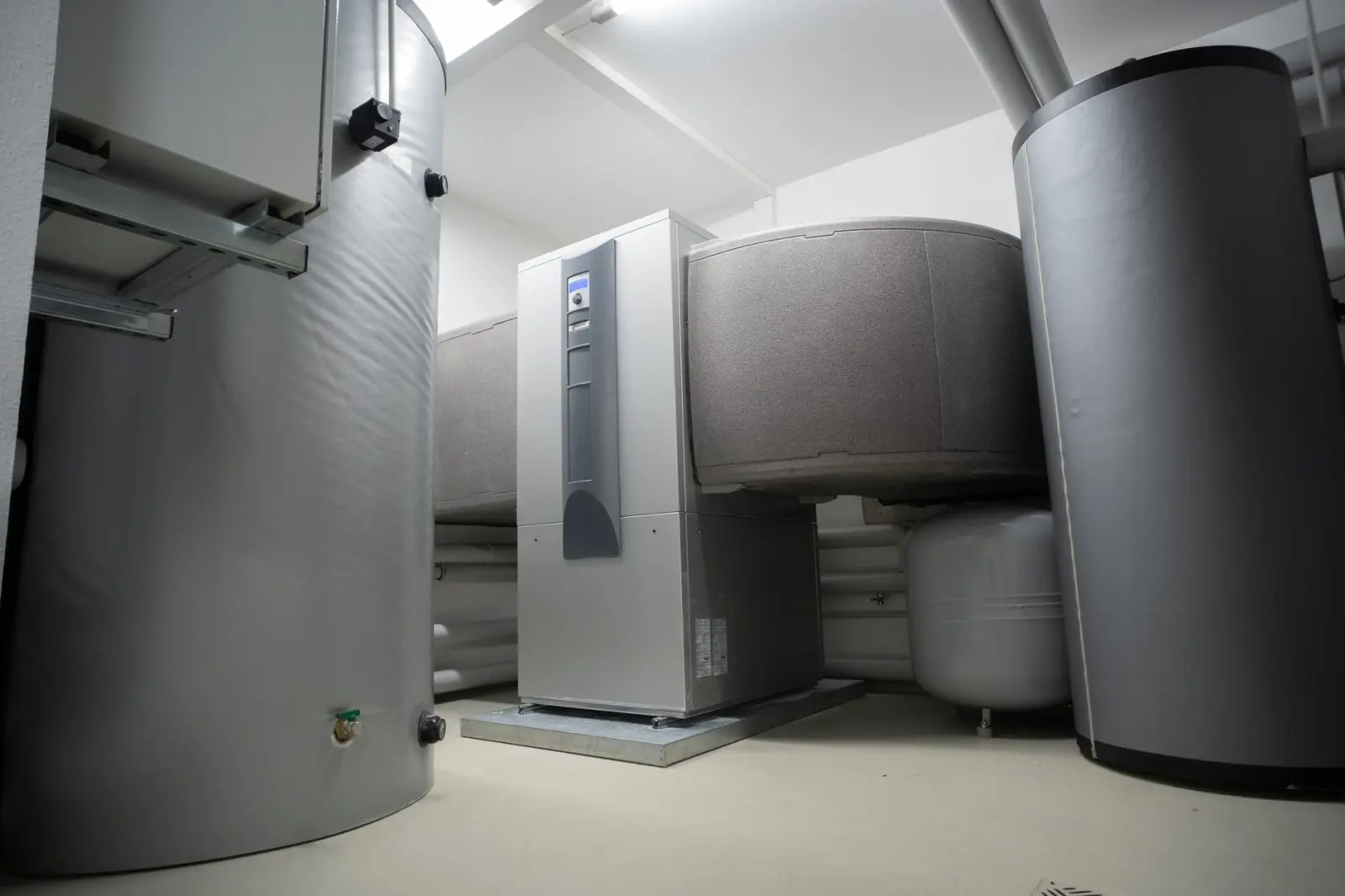
Heat pump water heaters operate on a principle that feels counterintuitive at first: they don’t create heat, they move it. A compressor circulates refrigerant through an evaporator coil that pulls thermal energy from the surrounding air, then releases that energy into your water tank. It’s the same basic mechanism as an air conditioner running in reverse, which is why I’ve always thought of them as the inverse of cooling systems rather than as traditional water heaters.
The efficiency advantage is real. A conventional electric resistance water heater converts electricity directly into heat at roughly 100% efficiency, but that’s misleading – a heat pump can deliver two to three times as much thermal energy to your water for the same electrical input, because it’s moving existing heat rather than generating new heat from scratch. That efficiency multiplier is what makes them attractive on paper, and in many cases, it holds up in practice.
But the real world introduces complications that manufacturers’ spec sheets don’t fully capture. I’ve installed these systems in climates where they made perfect sense and in others where they became expensive mistakes. The difference usually comes down to three factors: the ambient temperature where the unit sits, how the home uses hot water, and whether the installation location can tolerate the side effects of the system’s operation.
Where They Live Matters Most
Heat pump water heaters pull thermal energy from whatever air surrounds them. In a basement or utility room that stays around 65 to 75 degrees year-round, they work steadily and efficiently. The temperature difference between the air and the water tank is large enough to keep the compressor running without strain, and the system reaches its rated efficiency.
Put the same unit in an unheated garage in Minnesota, and the story changes. When outdoor air drops below 40 degrees, the evaporator coil has to work harder to extract heat. Below freezing, many heat pump water heaters automatically switch to electric resistance heating as a backup, which defeats much of the efficiency purpose. I’ve seen homeowners in cold climates buy these systems expecting year-round savings, then watch their electric bills spike once winter arrives and the backup heating kicks in repeatedly.
Humid climates present a different problem. As the evaporator coil cools the surrounding air to extract heat, moisture condenses on that coil. The system drains this condensation, which is normal, but in a basement or crawlspace, that steady drip can accumulate. I’ve had to address moisture issues in basements where a heat pump water heater was installed without proper drainage planning. The system itself isn’t broken – it’s just doing what it’s designed to do – but the installation didn’t account for where that water would go.
Usage Patterns and Recovery
Heat pump water heaters recover slowly compared to gas or electric resistance units. A standard electric tank might reheat a full 50-gallon tank in two to three hours. A heat pump water heater with the same capacity might take six to eight hours, even in ideal conditions. This matters more in some households than others.
A family of two or three that showers sequentially and doesn’t run multiple loads of laundry simultaneously often won’t notice the difference. The tank recovers between uses. But a household with teenagers, frequent guests, or a pattern of simultaneous hot water demand – dishwasher running while someone showers while laundry is going – will hit the recovery limit regularly. When that happens, the system switches to electric resistance heating to meet demand quickly, and you’re no longer getting the efficiency benefit you paid for.
I’ve seen homeowners frustrated by this without realizing it’s a limitation of the technology, not a defect. They expect a heat pump water heater to perform like their old 50-gallon electric tank but use half the electricity. That’s not how it works. The efficiency comes from steady, continuous operation in favorable conditions, not from fast recovery or handling peak demand.
Installation and Space Considerations
These systems need adequate air circulation around the evaporator coil to function properly. Cramped mechanical rooms or closets can starve them of air, reducing efficiency significantly. The unit also needs clearance for service – the compressor and controls are more complex than a simple electric element, and technicians need access to diagnose problems.
Noise is worth mentioning. The compressor runs with an audible hum, and in a basement near living spaces, some people find it noticeable. It’s not loud in the way a furnace is loud, but it’s continuous when the system is actively heating, and a few homeowners have mentioned it bothers them more than they expected.
Vibration isolation mounts help, but they add cost and complexity to the installation. I’ve seen jobs where the cheapest quote skipped this detail, and the homeowner ended up with a system that transmitted vibration through the floor joists into the living space above.
When the Math Actually Works
Heat pump water heaters make the most sense in moderate climates where heating season is mild and brief, or in climates where electricity rates are significantly lower than gas rates. In the Pacific Northwest, parts of California, and the Southeast, where winters are mild and ambient temperatures rarely drop below 50 degrees, they deliver consistent efficiency gains and payback periods that justify the higher upfront cost.
They also work well in homes where the installation location is climate-controlled – a basement that stays warm year-round, or an interior utility closet. The system operates in its design window consistently, and you get close to the efficiency numbers on the spec sheet.
In cold climates with natural gas available, a gas water heater usually makes more financial sense. The efficiency advantage of a heat pump narrows significantly when the system is running backup electric heating for half the year, and the installed cost difference is substantial. A homeowner in upstate New York or Minnesota is often better off with a gas unit and investing the savings elsewhere.
The payback calculation also depends on electricity rates. In areas where residential electricity costs 12 cents per kilowatt-hour or less, the annual savings from a heat pump water heater might be $200 to $300. With a system costing $2,500 to $3,500 installed, you’re looking at eight to fifteen years to break even. That’s a reasonable timeline for a water heater that should last ten to fifteen years, but it’s not a quick return.
Where electricity rates exceed 16 cents per kilowatt-hour, the math improves noticeably. The same system might save $400 to $500 annually, cutting the payback period to five to seven years. I’ve seen homeowners in Hawaii and parts of New England find real value in heat pump water heaters for this reason.
Real-World Reliability
These systems are more complex than electric resistance heaters, which means more can go wrong. The compressor is the critical component, and if it fails, repair costs run $800 to $1,500. A standard electric element costs $150 to $300 to replace. Warranty coverage varies by manufacturer, but many offer five to ten years on parts.
I haven’t seen widespread reliability problems with established brands, but the technology is newer in the residential market than gas or electric resistance water heaters, so long-term data is still accumulating. Refrigerant leaks are possible and require professional service. The controls are electronic and more sensitive to power fluctuations than older mechanical thermostats.
The systems also require more maintenance attention. Evaporator coils need to stay clean, and in dusty environments or where air quality is poor, that means periodic cleaning. A clogged coil reduces efficiency and can eventually cause the system to overheat and shut down.
In homes where the homeowner is comfortable with basic maintenance and has reliable access to qualified service technicians, these systems perform well. In remote areas where service calls are expensive and infrequent, the added complexity becomes a liability.
Heat pump water heaters are a legitimate efficiency tool, but they’re not a universal upgrade. They excel in specific conditions – moderate climates, stable indoor temperatures, moderate hot water demand, and reasonable electricity rates. Install one where those conditions align, and you’ll see the efficiency gains. Install one where they don’t, and you’ll end up paying more for a system that underperforms relative to its cost. The technology is sound; the installation context is what determines whether it’s the right choice.