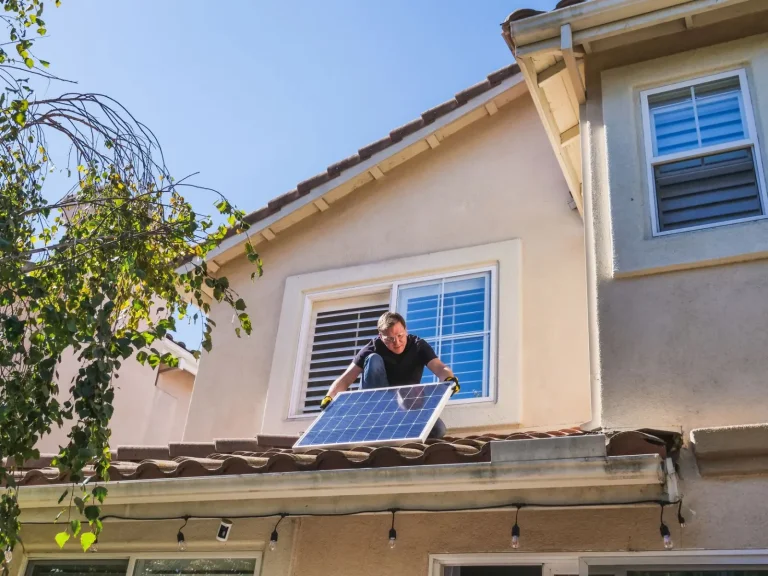


After years of installing and servicing both solar thermal systems and heat pump water heaters, I’ve learned that the answer to which is “better” depends almost entirely on where you live and how you use hot water. There’s no universal winner here, despite what manufacturers or online forums might suggest. Both systems work, both have genuine advantages, and both have real limitations that show up after a few seasons of operation.
The fundamental difference is straightforward: solar thermal systems capture heat directly from the sun and transfer it to your water tank, while heat pump water heaters extract ambient heat from the air or ground and compress it to heat water. On paper, solar sounds perfect – free energy from the sun. In practice, you’re dealing with weather dependency, seasonal variation, and a system that needs backup heating most of the year in temperate climates. Heat pumps, by contrast, work on any day as long as the air temperature is above freezing, but they consume electricity to move that heat around.
Climate is the dominant factor
I’ve installed solar thermal systems in Arizona, California, and parts of the Southwest where they genuinely shine. In those regions, you get consistent sun exposure year-round, minimal cloud cover, and the system pays for itself faster because it’s actually producing heat most days. A family in Phoenix running a solar thermal system will see meaningful savings within five to seven years.
The same system installed in Seattle, Portland, or the Northeast is a different story. Cloudy winters mean your backup electric or gas heater is doing most of the work from November through March. The solar contribution drops to maybe 20 to 30 percent of annual hot water needs. The payback period stretches to 12 to 15 years, assuming no major repairs. I’ve seen homeowners in those regions install solar thermal systems with genuine enthusiasm, only to feel disappointed when they realize they’re still paying for heating most of the year.
Heat pump water heaters perform more consistently across climate zones. They work efficiently in moderate climates and continue operating in cold weather, though their efficiency drops as outdoor temperature falls. In a northern climate, a heat pump water heater will use more electricity in winter than summer, but it’s still producing hot water without relying on a backup system. The trade-off is steady electricity consumption rather than seasonal sun capture.
Installation reality and space constraints
Solar thermal systems need roof space, and not just any roof space – ideally south-facing, unshaded, and structurally sound enough to handle the added weight. I’ve had conversations with homeowners who discovered their roof has too much shade from trees or neighboring buildings, making solar impractical. You also need space for the storage tank, which is typically larger than a standard water heater tank because it needs to hold heat collected during the day for use at night. In smaller homes or apartments, that’s a genuine constraint.
Heat pump water heaters are more flexible in placement. They can go in a basement, garage, utility closet, or even outdoors in warmer climates. They’re roughly the same footprint as a conventional water heater, sometimes slightly larger. The main requirement is adequate airflow around the unit so it can pull ambient heat efficiently. They’re also quieter than you might expect – modern units operate at around 50 to 55 decibels, which is noticeable but not disruptive in most residential settings.
Maintenance and long-term durability
Solar thermal systems require regular maintenance that many homeowners underestimate. The fluid circulating through the collectors needs periodic checking and occasionally replacement. Collectors can develop leaks. Pumps fail. The backup heating element wears out like any other water heater element. I’ve seen systems that were installed well but neglected for five years – the glycol fluid breaks down, efficiency drops, and repairs become expensive. A well-maintained solar thermal system can last 20 to 25 years, but that maintenance isn’t free or automatic.
Heat pump water heaters are mechanically simpler in some ways. There’s no fluid circulation, no collectors to maintain, no freeze protection concerns. The compressor and refrigerant circuit are sealed systems that rarely need attention. However, they do have moving parts – the compressor will eventually wear out, and replacement is expensive, typically $1,500 to $2,500 in labor and parts. Most heat pump water heaters are rated for 10 to 15 years of reliable operation, sometimes longer in moderate climates.
Operating costs and payback math
The cost comparison gets complicated because it depends on your current heating fuel, local electricity rates, and available incentives. In regions with cheap natural gas, a heat pump water heater’s electricity consumption can make the payback period longer than expected. In areas with expensive gas or high electricity rates, the calculation shifts. Solar thermal systems are often eligible for tax credits and rebates that heat pump water heaters may not receive, which can significantly improve the financial picture.
What I’ve observed consistently is that solar thermal systems have higher upfront costs – typically $4,000 to $8,000 installed – but lower operating costs once established. Heat pump water heaters cost $2,500 to $4,500 installed but have steady electricity consumption that shows up on every utility bill. In sunny climates, solar usually wins financially. In cloudy climates, heat pumps often come out ahead when you account for the total cost of ownership.
There’s also a behavioral factor I’ve noticed. Homeowners with solar thermal systems tend to be more conscious of their hot water use because they understand the sun is doing the work. People with heat pump water heaters sometimes use more hot water because the system is always available, which can offset some of the efficiency gains.
Practical considerations for existing homes
If you’re replacing a failed water heater and need a decision quickly, heat pump water heaters are usually easier to implement. Installation is straightforward, no roof work required, and the system is ready to go within a day. Solar thermal systems require more planning – roof assessment, structural evaluation, permit review, and more complex installation.
For new construction or a planned renovation, solar thermal makes more sense to consider because you can design the roof orientation and structure around it from the start. Retrofitting solar onto an existing home with a suboptimal roof angle or heavy shade is possible but less efficient.
One thing I tell homeowners is that neither system is a “set it and forget it” solution. Both require some attention over time. The question is whether you prefer occasional maintenance on a solar system that’s working when the sun is out, or steady electricity consumption from a heat pump that works every day. Your climate, roof situation, and utility costs should drive the decision more than any general principle about which technology is superior.