
After years of working with Australian gardens in varying climates – from coastal Sydney to inland Melbourne and the dry zones beyond – I’ve noticed a consistent pattern. Homeowners often approach low-maintenance landscaping as a compromise, expecting it to look sparse or boring. The reality is quite different. The best low-maintenance gardens I’ve worked with weren’t stripped-down versions of traditional designs. They were thoughtfully planned spaces that worked with the environment rather than against it.
The mistake most people make is treating “low-maintenance” as a single category. It isn’t. A low-maintenance garden in Perth requires entirely different plant selections and soil preparation than one in Canberra or Brisbane. The climate, rainfall patterns, soil type, and even the orientation of your block all shape what will genuinely require minimal input over five to ten years. Ignoring these factors is where projects start to fail – usually around year two, when initial enthusiasm fades and the reality of ongoing watering or pest management sets in.
Starting with Soil and Drainage
Before selecting a single plant, the foundation matters enormously. I’ve seen beautiful plant choices wilt or rot because the soil preparation was rushed or skipped. Australian soils vary wildly. In many suburban areas, you’re working with compacted clay that drains poorly, or sandy loam that drains too quickly and won’t hold nutrients. Neither is inherently a problem if you understand it and work with it.
Adding mulch is the most underestimated step in low-maintenance landscaping. A proper 75 – 100mm layer of quality mulch does several things at once: it moderates soil temperature, reduces water evaporation, suppresses weeds, and breaks down over time to improve soil structure. I’ve watched gardens that seemed to require constant watering transform after mulching, simply because the soil retained moisture longer. The key is using the right type – hardwood mulch tends to last longer than softwood, and it doesn’t compact as readily. Avoid coloured mulches and anything that smells strongly of ammonia; these are often made from recycled materials that can affect soil chemistry.
Drainage is equally critical, especially in areas with heavy clay. If water pools in your garden beds after rain, you’re setting yourself up for root rot and fungal issues that will demand attention. Sometimes this means installing French drains or raising beds slightly. It’s extra work upfront, but it eliminates a category of problems that would otherwise plague you for years.
Plant Selection Based on Real Conditions
This is where experience really matters. The plants that thrive in your garden depend on three things: your climate zone, the specific microclimate of your block, and your willingness to water during establishment. Too many people choose plants based on appearance alone, then wonder why they struggle.
Native plants are often recommended for low-maintenance gardens, and there’s sound reasoning behind this. They’re adapted to local rainfall patterns, soil conditions, and seasonal temperature swings. But “native” is broad. A plant native to coastal Queensland won’t necessarily thrive in inland Queensland. Similarly, a plant that loves full sun will suffer in a shaded corner, regardless of how hardy it’s supposed to be. I’ve seen people install native gardens that still required heavy watering because they didn’t match the specific conditions of the site.
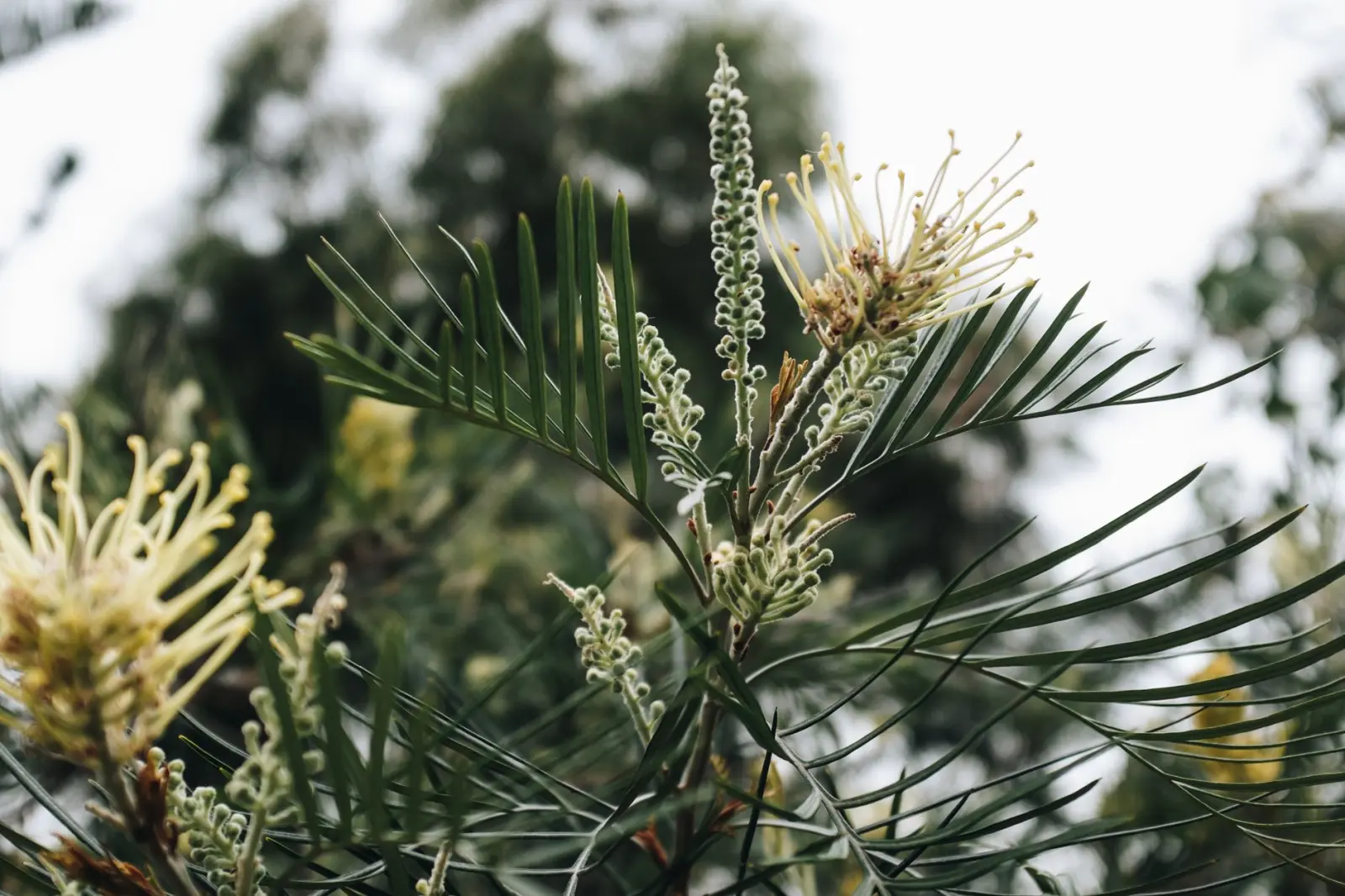
The plants that have consistently performed well in low-maintenance Australian gardens are those that tolerate drought once established, don’t require frequent pruning, and resist common pests without chemical intervention. Grevilleas, banksias, and callistemons fall into this category in many regions. For softer foliage, ornamental grasses like lomandra and carex handle neglect well. Ground covers such as myoporum parvifolium or creeping boobialla reduce weeding labour significantly. The key is choosing species suited to your specific zone and microclimate, not just what looks good in a nursery.
Hardscaping and Functional Layout
A low-maintenance garden isn’t purely about plants. Hardscaping – paving, gravel, timber edging, and structures – plays a major role in reducing ongoing work. A well-designed patio or deck reduces the area that needs mowing or weeding. Gravel paths are cheaper than pavers and require less maintenance if installed correctly over a weed barrier.
What I’ve observed is that people often underestimate how much hardscaping they actually need. A garden that’s 60% hardscaping and 40% planted beds requires far less labour than one that’s the reverse. This doesn’t mean creating a barren, unwelcoming space. Strategic placement of pavers, decking, or gravel creates usable outdoor living areas while reducing the maintenance footprint. It also tends to look more intentional and designed, rather than sparse.
Edging is worth mentioning separately because it’s often overlooked and then regretted. Without clear edging between garden beds and lawn or paving, grass creeps into beds and weeds blur the boundaries. Proper edging – whether metal, timber, or stone – takes an hour to install correctly but saves hours of maintenance over years. I’ve seen gardens where poor edging created a slow, creeping maintenance problem that eventually required complete redesign.
Water Management and Irrigation
Even in a low-maintenance garden, plants need water during establishment and during dry spells. The question is how to deliver it efficiently. Hand watering with a hose is labour-intensive and inconsistent. Sprinklers waste water through evaporation. Drip irrigation or soaker hoses are more efficient, but they require setup and occasional maintenance.
In my experience, the best approach depends on the size of the garden and your climate. In areas with reliable winter rainfall, you might only need supplementary watering during summer. In drier regions, irrigation becomes essential. A simple drip system on a timer reduces both water waste and your labour. It’s an investment upfront, but it pays for itself in water savings and reduced hand-watering time.
Rainwater harvesting deserves consideration too. A modest tank or two can capture enough water for establishment watering in many regions. This reduces reliance on mains water and gives you more control over irrigation timing and volume.
Realistic Expectations About Time and Cost
Low-maintenance doesn’t mean no-maintenance. Even the most carefully designed garden requires occasional attention. Mulch needs topping up every couple of years. Plants occasionally need pruning to maintain shape or remove dead wood. Weeds will appear, though properly mulched beds see far fewer of them. The difference is that these tasks become occasional rather than constant.
The upfront cost of a well-designed low-maintenance garden is often higher than a quick, generic planting. Quality mulch, proper soil preparation, hardscaping, and carefully selected plants all cost more initially. But spread over five to ten years, the labour savings and reduced water use typically offset this investment. I’ve worked with clients who spent more on initial design and installation, then found themselves spending a fraction of the time and money on maintenance compared to their previous gardens.
The gardens that perform best over time are those where the design matched the homeowner’s actual commitment level. If you genuinely don’t want to water or prune, you need to choose plants and layouts that reflect that reality. If you’re willing to spend an hour a week on your garden, you can be more ambitious. Honesty about your own involvement is more important than any plant choice or technique.