
After years of watching decks age across different Australian climates, I’ve learned that material choice matters far more than most homeowners realize when they’re standing in a showroom. The gap between what looks good on day one and what actually performs over a decade is substantial. Australia’s regional climate variation – from tropical humidity to arid heat, coastal salt exposure to alpine cold – means there’s no single best answer. What works brilliantly in Perth might fail in Brisbane, and vice versa.
The reality is that decking takes a beating. It’s exposed to UV radiation that’s genuinely intense here, temperature swings that stress materials, moisture that never fully leaves in humid regions, and salt air that corrodes almost everything near the coast. I’ve seen premium timber installations rot from the underside because ventilation was poor. I’ve watched composite boards cup and warp because the substrate wasn’t properly prepared. These aren’t manufacturing defects – they’re the result of Australian conditions meeting material limitations.
Solid Timber: Still the Most Common Choice
Hardwoods remain the dominant decking material across Australia, and there’s a reason for that beyond tradition. Spotted gum, blackbutt, and merbau have genuine durability credentials. Spotted gum, in particular, has been used in Australian construction for over a century and performs well in most climates except the most extreme coastal zones. Blackbutt is slightly softer but still reliable and takes a stain more evenly. Both are dense enough to resist the kind of surface splintering that plagues softer timbers.
The catch with hardwoods is that they require consistent maintenance. In my experience, homeowners who commit to annual or biennial sealing see their decks remain sound for 15 to 20 years. Those who skip sealing or do it haphazardly often see problems emerge within five to seven years. The wood doesn’t fail catastrophically – it greys, surface checks develop, and eventually rot begins at the edges and underneath where water pools. Tropical regions accelerate this timeline significantly. Merbau, which is imported from Southeast Asia, is harder and more rot-resistant than domestic hardwoods but costs more and can be difficult to source consistently.
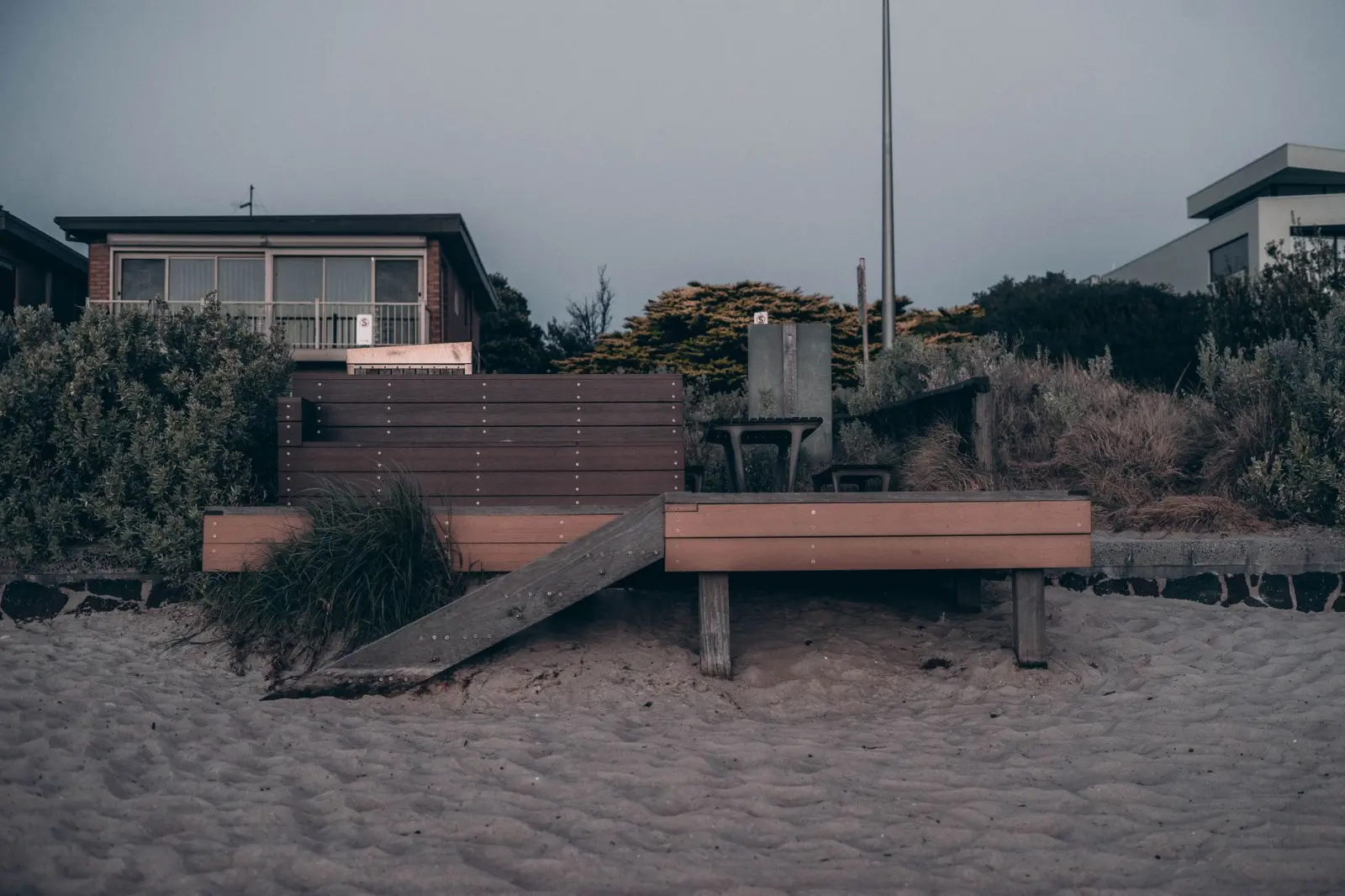
One detail that often gets overlooked: the quality of the substructure matters as much as the timber itself. Timber decks built on concrete footings or inadequate ventilation fail faster than those on proper stumps with airflow underneath. I’ve seen perfectly good timber ruined by poor drainage design where water collects under the deck rather than running away.
Composite Materials: Lower Maintenance, Different Problems
Composite decking – wood fibre mixed with plastic binder – arrived in Australia about 15 years ago and has steadily gained market share. The appeal is obvious: no sealing, no staining, minimal splinters. The reality is more nuanced. Composites do perform better in wet climates and near the coast because they don’t rot. They’re genuinely low-maintenance compared to timber. But they have their own failure modes.
Composite boards tend to expand and contract more than timber, especially in the heat. In hot Australian summers, I’ve seen composite decks develop noticeable gaps between boards that close again in winter. This movement can stress fasteners and cause boards to warp or cup if the substructure isn’t perfectly level and well-ventilated. Cheaper composites show this problem more obviously. Premium brands manage it better but don’t eliminate it entirely. The material also absorbs heat – a composite deck in direct sun can be significantly hotter underfoot than timber, which matters if you have barefoot traffic.
Staining is another issue. Composite doesn’t stain like timber, but it does discolour. Leaf debris, pollen, and algae growth leave marks that don’t wash off easily. In humid or shaded areas, I’ve seen composite decks develop a persistent greenish tint within a couple of years. It’s purely cosmetic, but it bothers people who expect the “maintenance-free” promise to mean “looks perfect forever.” Pressure washing can restore appearance but risks damaging the surface if done too aggressively.
Treated Pine and Budget Alternatives
Treated pine is cheap and widely available, which explains why it appears on so many residential decks. It’s pressure-treated with copper-based preservatives that genuinely prevent rot and termite damage. The problem is longevity and appearance. Treated pine is soft, splinters readily, and the preservative treatment doesn’t stop UV degradation. The wood greys quickly and develops a weathered look that some people like but most find tired-looking after three or four years. Maintenance still matters – sealing extends life, but you’re essentially fighting the material’s natural tendency to degrade.
In coastal areas or high-rainfall zones, treated pine is a false economy. It might last 8 to 10 years with care, but you’re resealing it regularly and dealing with surface issues. For the same money over time, a hardwood deck installed properly will outlast it by a decade or more.
Tropical and Specialty Timbers
Eucalypts like jarrah and karri are excellent but expensive and increasingly hard to source. Kwila (from Papua New Guinea) is dense, rot-resistant, and performs well in tropical climates, but again, cost is a barrier for most residential projects. Some builders use plantation-grown teak or other imported hardwoods, but these introduce supply chain variability and environmental questions that don’t sit well with many homeowners now.
Bamboo has appeared in the Australian market as a sustainable alternative. It’s harder than many softwoods and technically durable, but it’s not as common here and performance data from Australian installations is still limited. I’d approach it cautiously unless you’re in a region where it’s been proven over time.
Concrete and Pavers: Not Decking, But Worth Considering
Some outdoor spaces that people think of as “decking” are actually concrete slabs or paver systems. These eliminate wood entirely and perform reliably in Australian conditions. Concrete can crack in freeze-thaw cycles (rare in most of Australia but relevant in alpine areas) and can become slippery when wet or algae-covered. Pavers offer better drainage and a warmer surface but require proper base preparation and can settle unevenly over time if the ground shifts.
These aren’t decking in the traditional sense, but they’re worth mentioning because they’re genuinely low-maintenance alternatives that some homeowners prefer once they understand the trade-offs. They don’t age the way timber does – they don’t develop character, but they also don’t require the same commitment to upkeep.
Climate-Specific Reality Checks
In tropical regions (far north Queensland, Darwin), hardwood timber or composite are the realistic options. Treated pine fails too quickly. Coastal areas benefit from composite or naturally durable hardwoods because salt spray corrodes fasteners and accelerates timber degradation regardless of species. In temperate zones (Melbourne, Sydney, Adelaide), hardwood timber with proper maintenance is the most cost-effective long-term choice. In arid regions (Perth, inland), timber performs well because low humidity slows rot, though UV damage is intense and sealing matters.
The decision ultimately comes down to three factors: budget, climate, and willingness to maintain. There’s no material that eliminates all three concerns simultaneously. Timber is affordable and ages well with care but demands attention. Composite requires less maintenance but costs more upfront and has its own quirks in Australian heat. Budget materials are genuinely temporary solutions that look fine initially but deteriorate faster than the money saved suggests.