

Over the past five years, I’ve watched Australian capital markets undergo a quiet but persistent realignment. It’s not dramatic or sudden. Rather, it’s the kind of structural shift that becomes obvious only when you step back and compare where money was flowing in 2019 against where it moves today. Climate-related investment criteria have moved from the fringe of institutional decision-making into the operational core of how portfolios are constructed, how assets are valued, and how risk is assessed.
The change isn’t driven by sentiment alone. Regulatory bodies, superannuation trustees, and major institutional investors have begun embedding climate considerations into their fiduciary duties and disclosure frameworks. This isn’t a voluntary marketing exercise anymore. It’s becoming a compliance requirement, and that distinction matters enormously for how capital actually behaves.
What strikes me most is how unevenly this transition is playing out across different market segments. Some sectors have absorbed the pressure with relative ease. Others are experiencing genuine dislocation as capital retreats or reprices fundamentally. Understanding which is which requires looking beyond headlines and into the actual mechanics of how investment decisions are being made.
The Institutional Reorientation
Australian superannuation funds manage roughly $3.5 trillion in assets. When funds of that scale begin adjusting their investment mandates, the ripple effect across equity and fixed-income markets is substantial. I’ve observed that many large trustees are no longer treating climate risk as a subset of ESG considerations. Instead, they’re treating it as a core financial risk that affects valuation, cash flow projections, and long-term viability.
This shift has concrete consequences. Trustees are increasingly demanding climate scenario analysis from their fund managers. They’re asking harder questions about stranded asset risk, transition costs, and physical climate impacts on specific holdings. The language has changed too. Where conversations once centered on “sustainable investing” as a values-based choice, they now focus on “climate risk management” as a fiduciary necessity.
I’ve seen this play out in manager selection processes. Funds that lack sophisticated climate risk frameworks are finding themselves at a disadvantage when competing for mandates. Conversely, managers who can articulate clear climate integration methodologies and demonstrate consistent application across portfolios are attracting capital. The competitive dynamics have shifted, and that drives behavioral change faster than any moral argument could.
Equity Market Repricing and Sector Rotation
The Australian equity market has experienced visible repricing in certain sectors as climate considerations gain weight. Energy stocks, particularly those with heavy thermal coal exposure, have faced persistent downward pressure on valuations independent of commodity cycles. This isn’t mysterious. Investors are pricing in a narrowing investment universe and higher cost of capital as superannuation funds and institutional managers reduce or eliminate exposure.
What’s less obvious is how this repricing extends beyond obvious targets. Financial institutions with significant fossil fuel lending exposure are facing scrutiny. Insurance companies with large underwriting exposure to climate-vulnerable sectors are being questioned about their risk models. Utilities with aging coal-fired generation are being forced to accelerate transition timelines or accept valuation discounts.
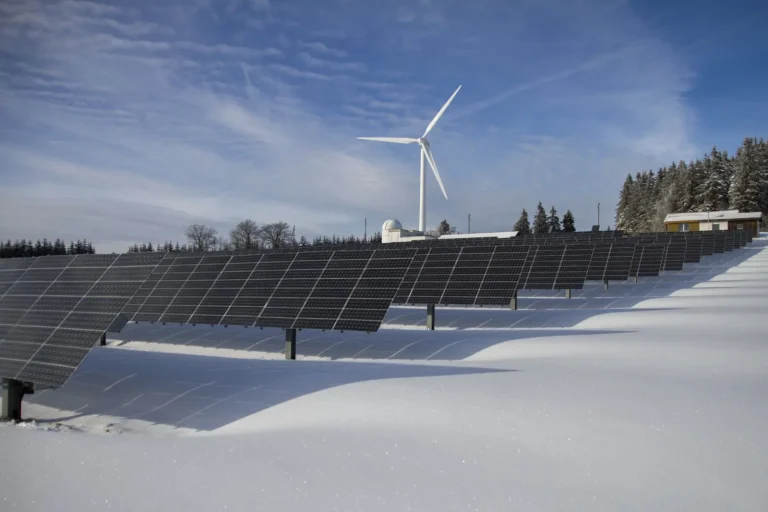
Meanwhile, renewable energy infrastructure, battery technology, and climate adaptation plays have attracted significant capital inflows. The Australian renewable energy sector has seen project financing costs decline as institutional investors compete for stable, long-duration cash flows. This creates a self-reinforcing cycle where lower capital costs make clean energy projects more economically viable, which attracts more capital.
Fixed Income and Credit Market Effects
The bond market has been slower to reprice climate risk than equities, but the movement is accelerating. Credit rating agencies are beginning to factor climate transition risk into their assessments. This means companies with poor climate positioning or weak transition strategies face potential rating downgrades, which increases their borrowing costs.
I’ve watched corporate issuers respond by improving their climate disclosures and committing to emissions reduction targets. Some of this is genuine strategic repositioning. Some is defensive, aimed at maintaining credit ratings and market access. The distinction matters less than the outcome: capital is flowing toward companies with credible climate strategies and away from those without them.
Green bonds and sustainability-linked debt have grown substantially in the Australian market. Issuers are using these instruments not just to access capital, but to signal commitment to investors who are actively screening on climate criteria. The pricing advantage for green bonds has narrowed in recent years as the market has matured, but the signaling value remains significant.
Disclosure Standards and Information Asymmetry
One of the more significant changes I’ve observed is the evolution of climate disclosure standards. The Task Force on Climate-related Financial Disclosures framework has become increasingly influential in how Australian companies report climate-related risks and opportunities. This isn’t uniform adoption yet, but the direction is clear.
Better disclosure creates more informed pricing. When investors have reliable, comparable information about a company’s climate exposure and transition strategy, capital allocation becomes more efficient. Companies that have historically avoided detailed climate disclosure are finding themselves at a disadvantage as investors demand consistency and transparency.
The regulatory environment is tightening around this. The Australian Securities and Investments Authority has issued guidance on climate risk disclosure expectations. The Australian Prudential Regulation Authority is embedding climate risk assessment into its supervisory framework for banks and insurers. These aren’t suggestions. They’re regulatory expectations that will likely harden into requirements.
Asset Valuation and Long-Term Assumptions
Perhaps the most subtle but consequential change is how climate considerations are affecting long-term valuation assumptions. When analysts model cash flows for a 30-year mining operation, they’re now grappling with questions about carbon pricing, regulatory risk, and demand destruction that didn’t feature prominently in models five years ago. This creates genuine uncertainty about terminal value calculations.
I’ve seen this play out in how different analysts value the same asset. Two competent analysts looking at the same company can arrive at significantly different valuations depending on their assumptions about climate policy trajectory, technology adoption rates, and transition timelines. This divergence is creating wider valuation ranges and higher volatility in certain sectors.
Companies with assets that are sensitive to climate policy are experiencing valuation compression. The discount rate applied to their cash flows is rising, partly due to higher perceived risk. This is particularly acute for companies in sectors where demand is expected to decline under climate transition scenarios.
The Practical Reality for Investors
What I observe in practice is that institutional investors are operating in an environment of genuine uncertainty about how quickly climate-related repricing will occur and how severe it will be. This uncertainty is driving more conservative positioning in some cases and more aggressive positioning in others, depending on how each investor is interpreting the signals.
Smaller investors and retail funds are often following the institutional lead, but with a lag. There’s still significant capital flowing into traditional energy and resource stocks, particularly among retail investors who may not be actively considering climate risk. This creates pockets of valuation disconnect that persist longer than they might in a more uniformly informed market.
The Australian market is also influenced by global capital flows. International investors applying climate screens to their portfolio construction are reducing Australian exposure in certain sectors, which amplifies the repricing effect. Conversely, global capital seeking climate solutions and renewable energy exposure is flowing into Australian renewable projects and related infrastructure.
What’s becoming clear is that climate investment considerations are no longer a temporary trend or a niche concern. They’re reshaping how capital is allocated, how risk is assessed, and how long-term value is calculated across Australian markets. The pace of change varies by sector and by investor type, but the direction is consistent. Investors who understand this shift and position accordingly are finding more efficient opportunities. Those who treat it as peripheral are increasingly finding themselves on the wrong side of capital flows.