
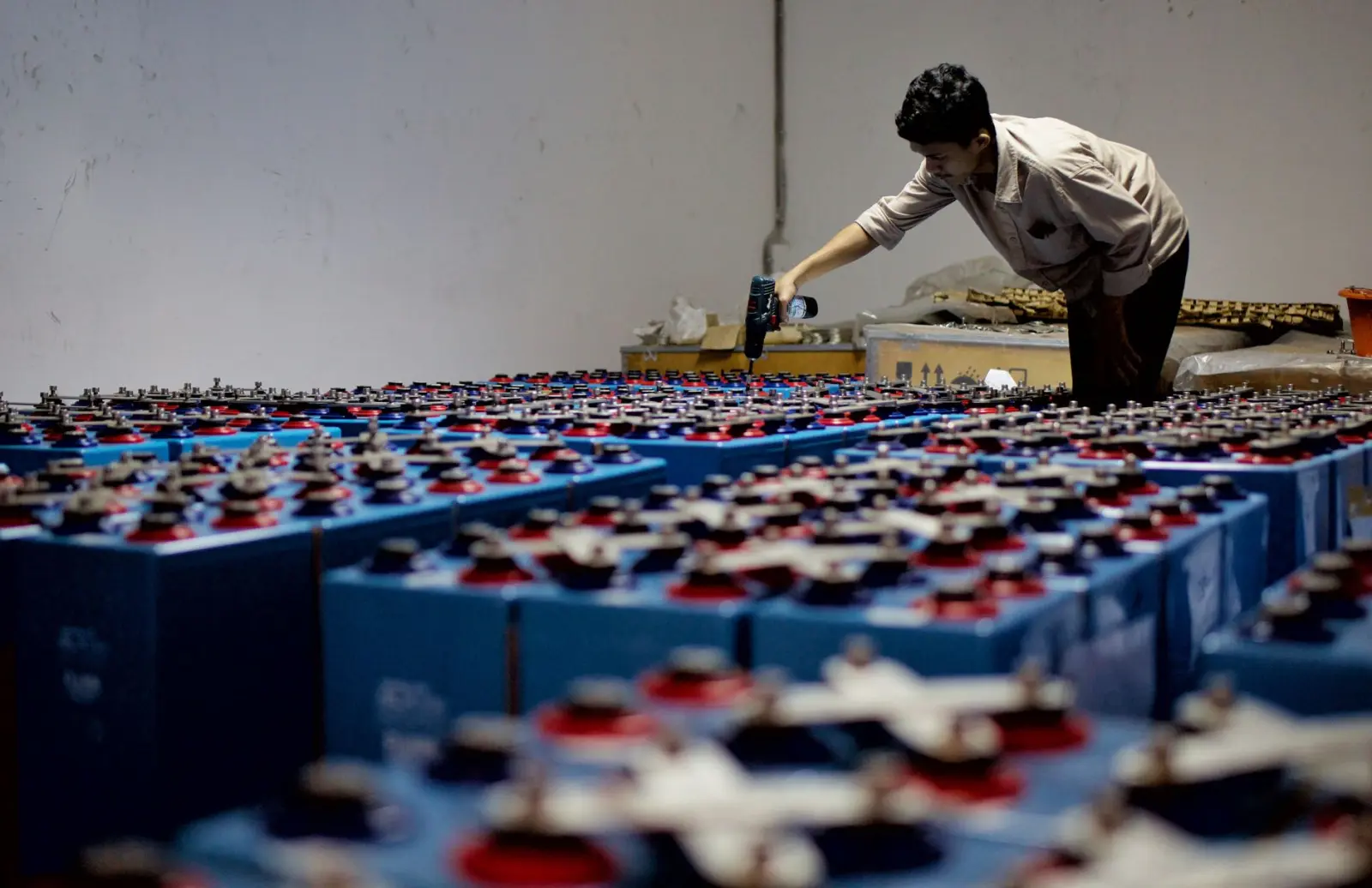
Large-scale battery projects have moved past the experimental phase. What we’re seeing now is a hard sorting of what actually works when you deploy these systems across real utility networks. The difference between a project that performs as intended and one that becomes a maintenance burden often comes down to decisions made during the planning phase, not during operation.
I’ve watched enough of these installations go live to recognize the patterns. The ones that function smoothly tend to share certain characteristics: realistic expectations about cycling rates, honest assessment of thermal management needs, and a genuine understanding of how the grid actually behaves during stress events. The ones that struggle usually skip one or more of these steps.
The scale matters more than people initially assume. A 100-megawatt battery system doesn’t just operate like a 10-megawatt system multiplied ten times. The interaction between the battery, the inverters, the grid connection point, and the control systems becomes far more complex. Temperature management across that many cells requires different thinking. Response times that work at smaller scales can create oscillation problems at larger ones.
Thermal Reality and System Lifespan
Battery degradation is not mysterious. It happens predictably based on temperature, depth of discharge, and cycling frequency. What trips up project planners is underestimating how hot these systems actually run under sustained operation. A lithium-ion battery rated for 80 percent depth of discharge performs that way in controlled lab conditions. In a grid support role where the system cycles multiple times daily during peak demand periods, especially in hot climates, you’re looking at real degradation that shortens the useful life by years.
Cooling systems for large installations are not afterthoughts. They’re central to the economics of the entire project. An undersized cooling system means the battery management system will throttle output during peak demand – exactly when you need the system to perform. I’ve seen projects lose 15 to 20 percent of their nameplate capacity during summer months because the thermal design couldn’t handle sustained discharge rates in ambient temperatures above 95 degrees Fahrenheit.
The cost of replacing cells or modules early is substantial enough that it changes the financial model of the whole project. This is why experienced operators now spend significant resources on thermal modeling before construction begins. They’re not being overly cautious. They’re accounting for what actually happens.
Grid Integration and Control Complexity
A battery system sitting on the grid is not a passive asset. It actively influences voltage, frequency, and power flow in ways that seem minor until they compound. When multiple battery installations come online in the same region, their control systems can interfere with each other if they’re not carefully tuned. I’ve observed situations where two projects operating independently created harmonic distortion that affected equipment several miles away on the same feeder.
The control algorithms matter more than the hardware specifications. A system with excellent response time but poor damping characteristics can make frequency stability worse, not better. Grid operators now require extensive testing of how a battery system behaves during fault conditions and rapid load changes. This testing often reveals that the initial control settings need adjustment. Sometimes significant adjustment.
Communication between the battery system and the grid operator is where many projects reveal their limitations. Real-time coordination requires low-latency connections and robust protocols. Wireless connections, while convenient, introduce latency that can be problematic during rapid transient events. Fiber or hardwired connections are more reliable, but they cost more and require more planning during site selection.
Cycling Patterns and Economic Reality
The revenue model for a battery project depends heavily on how often and how deeply the system cycles. A system designed for daily peak shaving operates very differently from one designed for seasonal storage or grid stabilization services. The cycling pattern directly determines degradation rate and replacement costs.
Projects that rely on arbitrage – buying power when it’s cheap and selling when it’s expensive – work well in markets with clear price spreads. But those spreads compress as more battery capacity comes online. I’ve seen projects that made financial sense on paper become marginal once competing systems in the same region started operation. The revenue per megawatt-hour of stored energy drops as supply increases.
Ancillary services – frequency regulation, voltage support, reactive power – provide more stable revenue streams than energy arbitrage, but they require tighter control and faster response times. A system optimized for one service type often performs poorly at another. This is why newer projects tend to be designed with multiple revenue streams in mind, even if they start with one primary function.
Supply Chain and Component Reliability
The battery cells themselves are now fairly standardized across major manufacturers. The variation that matters is in the balance-of-system components: inverters, transformers, cooling systems, and monitoring equipment. These components come from different suppliers with different reliability histories. A project that sources all components from a single vendor simplifies logistics but concentrates risk. A project that uses best-of-breed components from different vendors requires more integration work but spreads risk.
Inverter failures are the most common cause of unplanned downtime in large installations. This is not a secret – it’s well documented – yet projects still sometimes undersize inverter capacity or choose less robust models to save money. The cost of downtime during peak demand periods often exceeds the initial savings within the first year of operation.
Monitoring systems that track cell voltage, temperature, and state of charge at granular levels are now essential, not optional. They catch problems early enough to prevent cascading failures. Projects without comprehensive monitoring tend to discover problems only when the system stops responding as expected, which is usually during a critical grid event.
Permitting and Site Selection
The location of a battery installation affects its performance and longevity in ways that go beyond simple distance to load centers. Proximity to transmission infrastructure matters for grid connection efficiency. Local climate – temperature extremes, humidity, salt air if near coast – affects component degradation rates. Soil conditions affect foundation design and long-term settling.
Permitting timelines are often underestimated. Environmental review, interconnection studies, and local approval processes can easily add 18 to 24 months to a project schedule. This delay increases financing costs and can shift the project outside the window where tax incentives apply. Projects that account for realistic permitting timelines from the start tend to stay on budget.
Noise from cooling systems is a real concern in projects near residential areas. Battery systems don’t make noise themselves, but the cooling fans do. A project that didn’t account for noise ordinances in the planning phase may need expensive retrofits or face operational restrictions during certain hours.
The future of grid storage is not about breakthrough technology. It’s about deploying what we know works, learning from what doesn’t, and building systems that perform reliably over their intended lifespan. The projects that succeed are the ones where the operators understood their specific grid, chose appropriate technology for that context, and invested in the infrastructure – thermal, electrical, and operational – needed to support it. The ones that struggle usually skipped one of these steps.