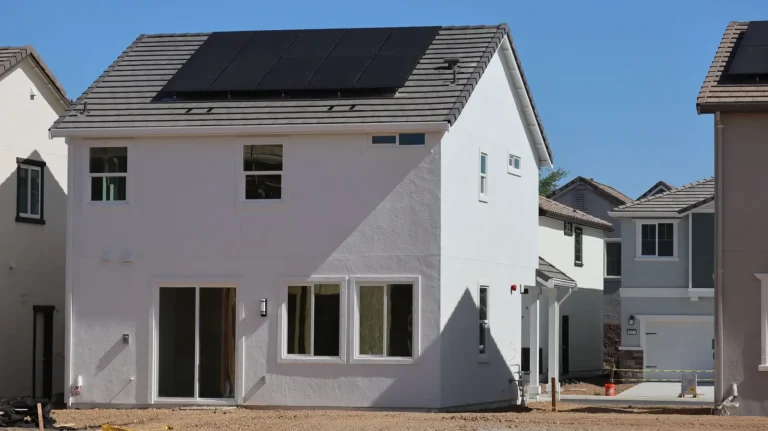

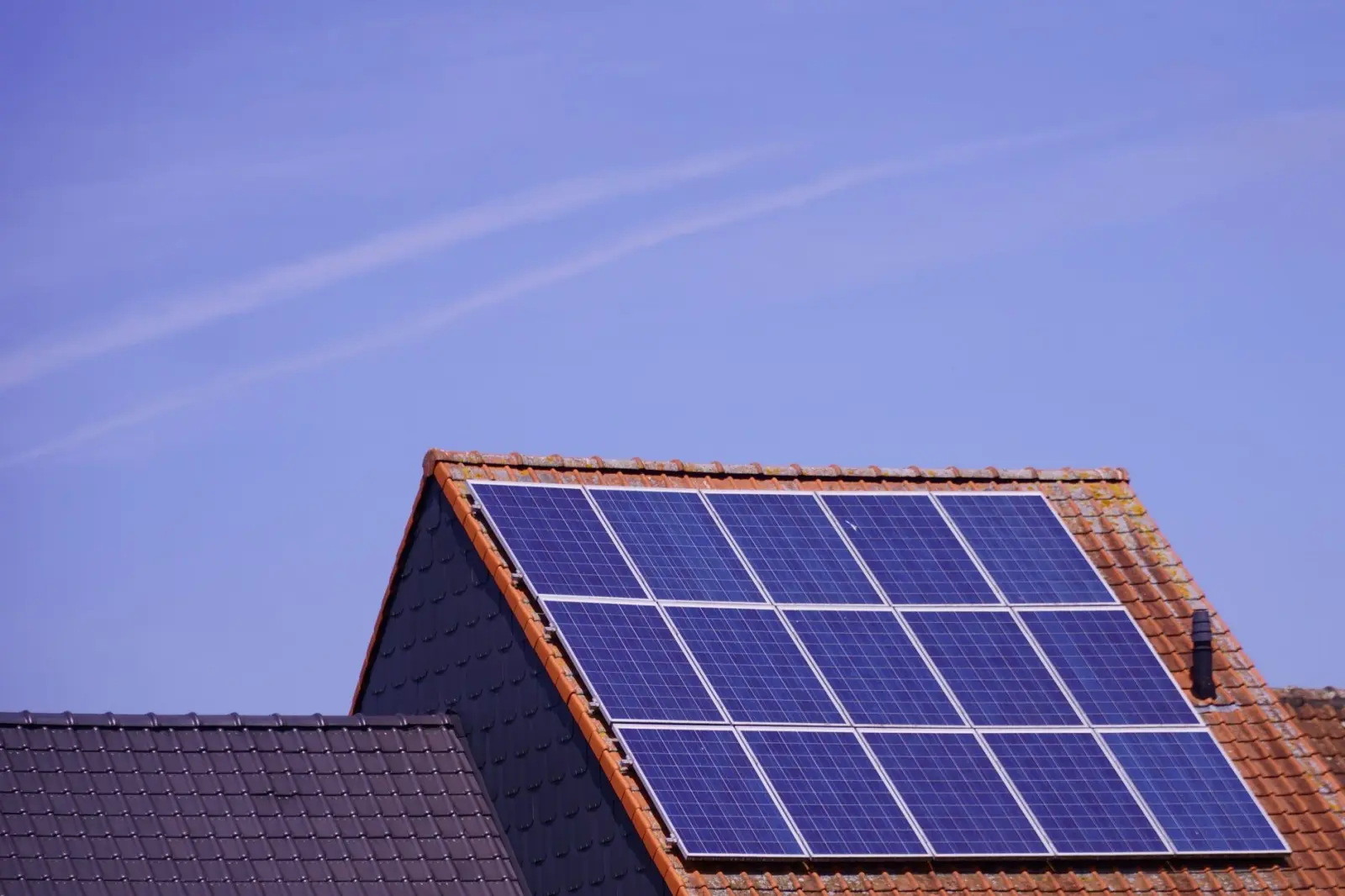
Over the years, I’ve watched homeowners discover a hard truth about solar panels the moment the power goes out: their system stops working. They stand in the dark, staring at thousands of dollars in rooftop equipment that suddenly seems useless. The reason is straightforward but counterintuitive. Grid-tied solar inverters are designed to shut down during outages as a safety measure. If the grid is down and a utility worker is repairing lines, the last thing anyone wants is live electricity flowing back into those dead wires. So the inverter detects the grid failure and disconnects, leaving the home without power even though the sun is shining.
This is where batteries enter the picture. A home battery system – whether a Tesla Powerwall, LG Chem, Generac PWRcell, or another brand – sits between your solar panels and your home’s electrical panel. When the grid is operating normally, the battery charges from excess solar production or from the grid itself during off-peak hours. When the grid fails, the battery takes over, supplying power to your home while the solar inverter remains offline. Some modern hybrid inverters can switch the system into a special mode that allows solar to charge the battery and power selected circuits even during an outage, but this requires specific equipment and configuration.
How Much Power Actually Matters
The first question homeowners ask is how long the battery will last. The answer depends entirely on what you’re trying to run. A typical residential battery like a Powerwall has a usable capacity of around 13 kilowatt-hours. If your home draws 1 kilowatt during an outage, that battery theoretically lasts 13 hours. But homes rarely draw power evenly. A refrigerator cycles on and off. An electric water heater can draw 4,000 to 5,000 watts when heating. Air conditioning systems pull 3,000 to 5,000 watts continuously. Running all of these simultaneously will drain a battery in minutes.
This is why battery systems work best when paired with a critical load panel – a secondary electrical panel that isolates essential circuits like refrigeration, lighting, a few outlets, and sometimes a heat pump or mini-split system. During an outage, the battery powers only these circuits, stretching its capacity from hours to potentially a full day or more, depending on usage patterns and solar recharge rates. I’ve seen homes with a single battery and no critical load panel run out of power before noon on a cloudy day, then sit dark for the rest of the outage. Homes with a critical load panel and the same battery capacity lasted through a three-day outage with careful management.
Solar Recharge During an Outage
If the sun is shining during an outage, solar panels can recharge the battery throughout the day. On a clear day, a modest 6-kilowatt solar array can generate 30 to 40 kilowatt-hours, more than enough to keep a battery topped up and power essential loads simultaneously. But this only works if the system is configured correctly. A standard grid-tied solar installation without a battery or hybrid inverter cannot use solar power during an outage, period. The inverter shuts down, and the panels sit idle.
With a hybrid inverter and battery, solar production flows into the battery first, then to the home’s critical loads, with any excess fed back to the grid if it’s operational. During an outage, the same logic applies – solar charges the battery, and the battery powers the home. On cloudy days or at night, the battery alone sustains the home until either the grid returns or the sun rises. I’ve observed that most outages last between 4 and 24 hours in residential areas, so a battery system with solar backup often carries a home through without any real hardship, assuming the critical load panel is sized reasonably.
Installation Reality and Common Oversights
The technical side of integrating solar and batteries is more nuanced than marketing materials suggest. The inverter must support both solar input and battery charging simultaneously. The battery must have adequate capacity relative to the home’s critical loads. The critical load panel must be installed correctly, with proper breaker sizing and circuit separation. Wiring must handle the current flows in both directions. Grounding must be correct. These aren’t optional details – they determine whether the system actually works when needed.
I’ve encountered installations where the battery was sized for a home’s total electrical demand rather than its critical loads, leading to rapid depletion during an outage. I’ve seen critical load panels installed without proper load calculation, resulting in undersized conductors that overheat. I’ve watched homeowners discover that their hybrid inverter doesn’t actually support solar charging during an outage because the installer didn’t enable that feature in the firmware. These aren’t failures of the technology – they’re failures of planning and configuration.
What the System Cannot Do
It’s worth being clear about the limits. A home battery system cannot power an entire house indefinitely without solar input. A 13-kilowatt-hour battery powering a typical home’s full electrical load lasts roughly 4 to 6 hours. Electric heating and cooling are particularly demanding. If an outage occurs during winter and you’re relying on electric resistance heating, a battery system will keep you warm for a few hours at best. Heat pumps are more efficient, but they still draw significant power. Propane or natural gas heating, by contrast, uses minimal electricity for controls and ignition, making it far more compatible with battery backup.
Water heaters present another challenge. A 50-gallon electric water heater can consume 4,000 to 5,000 watts for 30 to 45 minutes to heat a full tank. During an outage, most homeowners simply avoid using hot water, or they limit it to what’s already in the tank. Solar and battery systems are best thought of as supplements to resilience, not replacements for grid electricity. They extend your ability to function during an outage, but they don’t eliminate the need for other preparations like water storage, food that doesn’t require cooking, and alternative heating sources in cold climates.
The Practical Middle Ground
After seeing dozens of installations, I’ve found that the most effective approach is modest and realistic. A home with 6 to 8 kilowatts of solar, a single battery (13 to 15 kilowatt-hours), a critical load panel, and a hybrid inverter can maintain essential functions through most outages. Add a backup generator for extended outages, and the system becomes genuinely resilient. The generator can recharge the battery when solar production is low, and the battery can reduce the generator’s runtime, saving fuel and noise.
Cost matters too. A complete system with solar, battery, hybrid inverter, and critical load panel typically runs $25,000 to $40,000 before incentives. Federal tax credits and some state rebates can reduce this significantly, but it’s still a substantial investment. For many homeowners, the real value isn’t in eliminating all outage risk – it’s in knowing that essential systems will keep running for at least a day or two, buying time for repairs or alternative arrangements.
The technology works. I’ve watched it perform during actual outages, and it does what it’s designed to do. But it works best when expectations are aligned with reality, when the system is sized appropriately for actual critical loads, and when the installation is done carefully. Solar and batteries aren’t magic. They’re tools that extend your home’s independence from the grid, but only within honest limits.