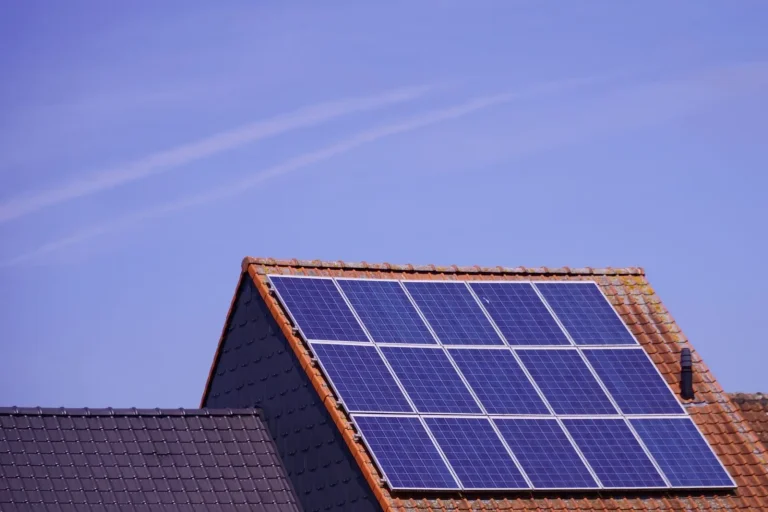

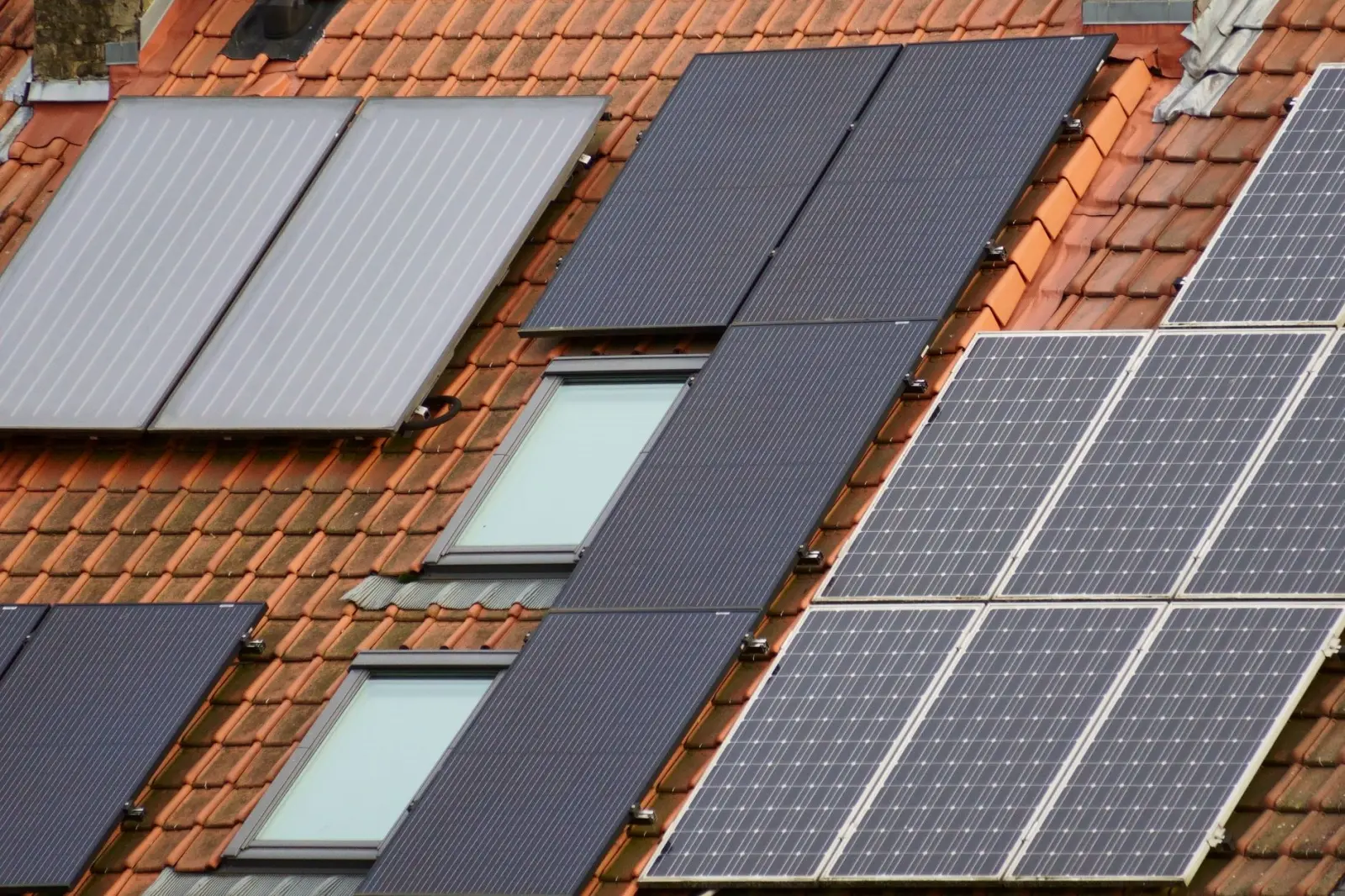
After installing solar and battery systems in dozens of homes, the most common misconception I encounter is that these are two separate technologies that happen to coexist. They’re not. A solar array and a battery bank form a single power ecosystem, and understanding how they interact is essential to getting realistic performance from either one.
The relationship between solar generation and battery storage is fundamentally about timing and flow. Solar panels produce power only during daylight hours, with output varying by cloud cover, season, and panel angle. A battery system exists to capture that power when it’s available and release it when it’s needed – typically at night or during cloudy stretches. Without batteries, excess midday solar generation simply flows back to the grid (if you’re grid-connected) or gets wasted. With batteries, that same excess power gets stored for use when the sun isn’t shining.
The actual mechanics of this integration happen through an inverter-charger, a device that sits between the solar array, the battery bank, and your home’s electrical panel. This component is doing multiple jobs simultaneously, and its behavior changes throughout the day based on what’s happening with solar generation, battery state, and household demand.
The Daily Power Flow
On a clear morning, solar panels begin producing power as soon as there’s sufficient light. The inverter-charger detects this incoming DC power from the panels and makes an immediate decision: if the battery isn’t fully charged, it routes the solar power directly to the batteries. This is the charging phase. As long as solar production exceeds household consumption and the battery has capacity, power flows into storage.
Once the battery reaches full charge – and this is where I see real-world conditions matter – the inverter-charger shifts behavior. Excess solar power now flows directly to your home’s loads. If there’s still more power than the home is using, the surplus either feeds back to the grid (in grid-tied systems) or is simply curtailed, meaning the inverter stops the panels from producing beyond what can be used or stored. This prevents overcharging the battery, which damages cells and shortens lifespan.
As the sun moves across the sky and afternoon clouds roll in, solar output naturally declines. The inverter-charger continuously monitors the gap between what the panels are producing and what the home is consuming. If panels are generating less than the home needs, the battery automatically begins discharging to make up the difference. This transition happens invisibly – most homeowners don’t notice the moment their home switches from solar power to battery power because there’s no interruption in service.
Evening and Night Operation
Once the sun sets, solar production drops to zero. The home is now entirely dependent on battery power (in off-grid systems) or on the battery supplemented by grid power (in hybrid systems). The inverter-charger manages the battery discharge rate based on how much power the home is drawing. A home running minimal loads – refrigerator, some LED lights, a few always-on devices – might draw 300 to 500 watts. A home with an air conditioner or electric heating running could draw 3,000 to 5,000 watts or more.
The battery’s state of charge directly affects how long it can sustain the home. A 10 kWh battery bank powering a 500-watt average load can theoretically run for 20 hours. The same battery powering a 2,000-watt load runs for only 5 hours. In practice, you rarely use the full capacity of a battery. Most systems are sized to discharge only 80 to 90 percent of their rated capacity to preserve longevity, so a 10 kWh battery might only provide 8 to 9 kWh of usable power per cycle.
How the System Responds to Demand Spikes
One of the more interesting dynamics I’ve observed is how the system handles sudden demand increases. If a homeowner turns on an electric oven or starts a load of laundry at dusk, the inverter-charger has to instantly supply that power. If the battery is charged and available, it does so without hesitation. The battery voltage momentarily dips under the sudden load, but the inverter compensates by drawing more current from the battery, and the home gets its power.
If the battery is depleted or nearly depleted, the inverter-charger has a different response depending on whether the home is grid-connected. In a grid-tied hybrid system, the inverter seamlessly pulls power from the grid to cover the demand. In an off-grid system, there’s a hard limit – the inverter can only supply what the battery has available, and if that’s insufficient, the system may shed non-essential loads or trigger a brownout condition where voltage and frequency dip noticeably.
Seasonal and Weather Patterns
The performance relationship between solar and batteries shifts dramatically with season. In summer, solar production peaks, batteries charge quickly, and many days see surplus generation. In winter, solar production drops significantly – sometimes to 30 or 40 percent of summer output – while household heating loads increase. This mismatch is why oversizing the battery bank matters in colder climates. A battery that’s adequate for summer might be chronically depleted by mid-afternoon in winter.
Cloudy weather introduces another layer of complexity. On a heavily overcast day, solar panels might produce only 10 to 20 percent of their rated capacity. If the battery isn’t fully charged from the previous day, the system can quickly find itself drawing from the grid (if available) or depleting the battery faster than it’s being replenished. This is why battery management software often includes weather forecasting – some systems automatically reduce battery discharge rates when a multi-day cloudy period is predicted, conserving stored energy for when it’s most needed.
Temperature Effects and Real-World Efficiency
Battery performance is temperature-dependent in ways that often surprise homeowners. Lithium batteries, the most common type in residential systems, operate optimally between 60 and 80 degrees Fahrenheit. In cold climates, battery capacity drops significantly – a battery rated for 10 kWh at 70 degrees might only deliver 7 or 8 kWh at 32 degrees. The inverter-charger compensates by adjusting charging rates, but the net effect is reduced usable capacity during winter months when demand is highest.
Solar panels also lose efficiency in extreme heat. While panels generate power from light, not heat, high ambient temperatures reduce their electrical output by about 0.4 to 0.5 percent per degree Celsius above 25 degrees Celsius. A solar array in Arizona on a 110-degree day produces noticeably less power than the same array on a 75-degree day, even with identical sunlight. The battery system has to compensate by drawing more from storage or the grid.
I’ve also noticed that the inverter-charger itself generates heat during operation, particularly during high-power charging or discharging cycles. This heat dissipates into the surrounding environment, and in warm climates or poorly ventilated spaces, the inverter can throttle back its output to prevent overheating. This is rarely a problem in residential systems, but it’s worth noting when sizing equipment for high-demand homes or in hot climates.
The Communication Layer
Modern solar and battery systems communicate through digital protocols. The inverter-charger constantly monitors battery voltage, current, temperature, and state of charge. It also monitors solar panel output, grid voltage (if applicable), and home load demand. Based on this data, it makes real-time decisions about power routing and charging rates.
Some systems include software that learns household consumption patterns and adjusts battery discharge strategy accordingly. If the system recognizes that peak demand always occurs between 6 and 8 PM, it might reserve battery capacity for that window rather than depleting it earlier in the evening. Other systems integrate with weather data to anticipate solar production and adjust charging rates or discharge limits preemptively.
The inverter-charger also serves as a safety device. If the battery voltage gets too low, it stops discharging to prevent deep discharge damage. If the battery temperature rises above safe limits, it reduces charging current. If the grid voltage becomes unstable (in grid-tied systems), it can disconnect from the grid to protect the battery and home from voltage spikes. These protective functions operate continuously and invisibly.
Over time, I’ve found that the most reliable solar and battery systems are those where the components are properly matched in capacity and the inverter-charger is sized appropriately for both the solar array and the battery bank. An undersized inverter can’t take full advantage of a large solar array or efficiently discharge a large battery. An oversized inverter wastes money and introduces unnecessary complexity. The same applies to battery capacity relative to solar production – too much battery relative to solar generation means the battery rarely charges fully, while too little battery means frequent grid draws or load shedding.
The integration of solar and batteries is ultimately about creating a resilient power source that captures free energy when available and uses it intelligently when needed. The technology handles most of this automatically, but understanding the underlying dynamics helps homeowners set realistic expectations and maintain their systems effectively over time.