

Australia’s electricity grid has been undergoing a gradual but unmistakable shift over the past decade. What started as a handful of solar installations on suburban rooftops has evolved into a wholesale transformation of how power reaches homes and businesses. The change isn’t smooth or linear – it’s messy, sometimes contradictory, and constantly pushing against the constraints of infrastructure designed for a different era.
I’ve watched this transition unfold from multiple angles: working with installers adapting to new grid codes, observing how aging coal plants operate under reduced demand, and seeing firsthand how communities grapple with the practical implications of rapid renewable deployment. The path toward lower emissions isn’t a simple story of old technology being replaced by new. It’s a complex negotiation between what we’re trying to build and what we’re trying to leave behind.
The Scale of Renewable Deployment
Solar and wind capacity in Australia has grown at a pace that caught many people off guard. By the early 2020s, renewables were generating roughly 30 percent of the country’s electricity, a figure that continues to climb. What’s notable about this growth isn’t just the headline numbers – it’s the speed and the geographic distribution. Unlike the centralized coal plants that dominated for decades, renewable generation is scattered across the country, embedded in communities, and often invisible to the people who benefit from it.
Large-scale solar farms and wind installations have become commonplace in rural areas where land is available and wind resources are reliable. At the same time, rooftop solar on residential and commercial buildings has created a distributed generation network that fundamentally changes how electricity flows through the grid. This dual approach – utility-scale and distributed – creates both opportunities and complications that operators have had to learn to manage in real time.
The economics of renewables have shifted dramatically. Solar and wind are now cheaper than coal on a per-megawatt basis, a fact that has accelerated investment regardless of policy support. This economic reality matters more than most policy announcements. When something becomes the cheaper option, it tends to happen faster than anyone predicted.
Grid Stability and the Intermittency Challenge
Here’s where the practical difficulties emerge. Coal plants, for all their environmental drawbacks, provide what grid operators call “synchronous inertia.” They’re massive rotating machines that stabilize frequency and voltage automatically. When demand spikes or supply drops unexpectedly, the grid’s natural physics helps smooth the transition. Renewables don’t work that way. Solar panels and wind turbines are electronic converters. They’re fast and responsive in their own way, but they require different support systems.
Australia’s grid has experienced several high-profile incidents where rapid cloud cover over solar farms or sudden wind drops created frequency disturbances. These aren’t catastrophic failures – the grid is designed with multiple safeguards – but they highlight a real constraint. As coal capacity shrinks, the grid loses that mechanical stability, and operators must compensate through other means: faster-responding gas plants, battery storage, synchronous condensers, and sophisticated software controls.
Battery storage has become the obvious answer, and deployment is accelerating. Large-scale battery systems can respond to frequency changes in milliseconds, faster than any conventional generator. But batteries are expensive infrastructure that only makes economic sense in certain locations and at certain scales. They’re not a universal solution; they’re a tool that works best in specific contexts.
The Coal Fleet’s Slow Exit
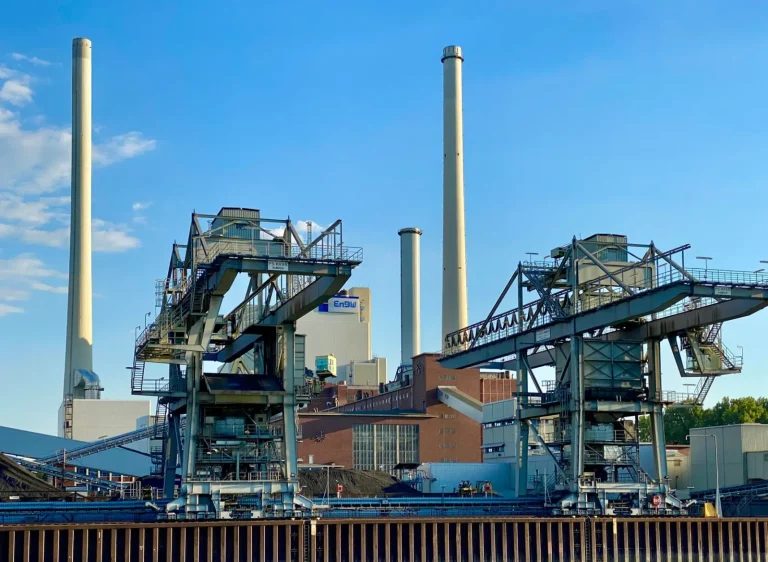
One of the less discussed aspects of Australia’s transition is what happens to the coal plants themselves. These are massive facilities with decades of operational history. They don’t simply vanish when renewables become cheaper. Instead, they linger, operating at lower capacity factors, becoming less economically viable but still present on the grid.
The Liddell power station closure in 2023 was a notable milestone, but it took years of planning and negotiation. Other plants continue operating despite uncertain futures. This creates a peculiar situation where aging infrastructure remains grid-critical because the transition hasn’t fully replaced its capacity. It’s expensive to maintain plants that run intermittently, and it’s economically inefficient, but the alternative – relying entirely on renewables before storage and grid management systems are fully mature – carries its own risks.
The workforce implications are real too. Coal mining and power generation employed tens of thousands of people across Australia. The transition requires those workers to move into different industries or regions, a process that takes time and involves genuine hardship for some communities. This human dimension often gets overlooked in discussions about emissions reduction, but it’s central to whether the transition actually happens smoothly.
Network Investment and Transmission Challenges
The physical infrastructure of the grid – poles, wires, substations, and transmission lines – was designed to move power from a few large central generators to distributed consumers. The renewable transition reverses some of that flow. Solar and wind farms are often located far from major population centers, requiring new transmission corridors. This requires enormous capital investment and navigates complex land rights and environmental considerations.
Upgrading distribution networks to handle rooftop solar feeding power back into the grid is another ongoing challenge. Many suburban networks were designed with one-way power flow in mind. Accommodating two-way flow requires new equipment, monitoring systems, and sometimes complete network redesigns. This work is expensive and unglamorous, but essential.
The National Electricity Market operator has had to become more sophisticated in managing grid constraints. Real-time balancing of supply and demand across different states, managing network congestion, and ensuring frequency stability require constant adjustment. The software and control systems have evolved significantly, but they’re always operating at the edge of their design parameters as renewable penetration increases.
State-Level Variation and Policy Inconsistency
Australia’s electricity system is partly national and partly state-based, creating a patchwork of different policies and targets. South Australia has pushed hard toward renewables and now operates with some of the highest renewable penetration rates globally. New South Wales has followed a different trajectory. Queensland, with its coal resources, has moved more cautiously. This variation creates both complexity and flexibility in how the transition unfolds.
Policy inconsistency – changes in government leading to shifts in renewable targets or subsidies – has created investment uncertainty. Developers and utilities need long-term visibility to justify major capital expenditure. When policy changes every few years, it creates stop-start cycles that slow progress and increase costs. The most successful renewable projects have typically been those where policy remained stable long enough for investment to flow.
The relationship between state and federal policy remains contentious. Some states have pursued aggressive renewable targets while federal policy has been more ambiguous. This disconnect creates inefficiencies and sometimes contradictory investments. A more coordinated approach would likely accelerate the transition, but coordination across Australian political jurisdictions has never been straightforward.
The Role of Industrial Demand and Electrification
One factor that shapes the grid’s future is how industrial energy demand evolves. Heavy industries like steel and chemicals have traditionally relied on coal for both electricity and heat. Electrifying these processes – replacing coal with renewable electricity – would dramatically increase grid demand while simultaneously reducing emissions. This is technically feasible but requires substantial investment in both industrial equipment and electricity supply.
Transport electrification adds another layer of demand. As electric vehicles become more common, charging infrastructure will need to integrate with the grid. This could either stabilize the grid (if charging is managed intelligently during low-demand periods) or stress it (if everyone charges during peak hours). Smart charging systems can help, but they require coordination between vehicle manufacturers, charging networks, and grid operators.
The interaction between these demand-side changes and supply-side renewables will largely determine whether Australia’s grid operates smoothly or under constant stress. Getting this balance right requires planning that extends years into the future, something that’s difficult when technology, economics, and policy are all in flux.
Australia’s path toward a lower-emissions grid is neither inevitable nor impossible. It’s a process unfolding through the decisions of investors, engineers, policymakers, and communities. The technical pieces exist – renewables are viable, storage is improving, grid management is becoming more sophisticated. What remains uncertain is the pace, the consistency of policy support, and whether the transition happens fast enough to meet climate targets while maintaining reliable, affordable electricity. The grid of the next decade will look fundamentally different from today’s, but how different, and how smoothly that change occurs, remains an open question.