
Over the past five years, I’ve watched the relationship between Australian homes and the electricity grid shift fundamentally. What used to be a one-way street – grid supplies power to the house – has become something closer to a two-way conversation. Homes with solar panels and battery storage are now being asked to participate in what the industry calls virtual power plants, or VPPs. The concept isn’t new, but the scale at which it’s happening in Australia is genuinely unprecedented.
A virtual power plant doesn’t exist as a physical location. Instead, it’s a network of distributed energy resources – primarily residential solar systems and batteries – that are coordinated through software to behave like a single power station. When a utility or grid operator needs to balance supply and demand, they can draw on the aggregated capacity of thousands of homes simultaneously. From the grid’s perspective, this is valuable. From a homeowner’s perspective, it’s a way to earn money from energy they’ve already invested in generating.
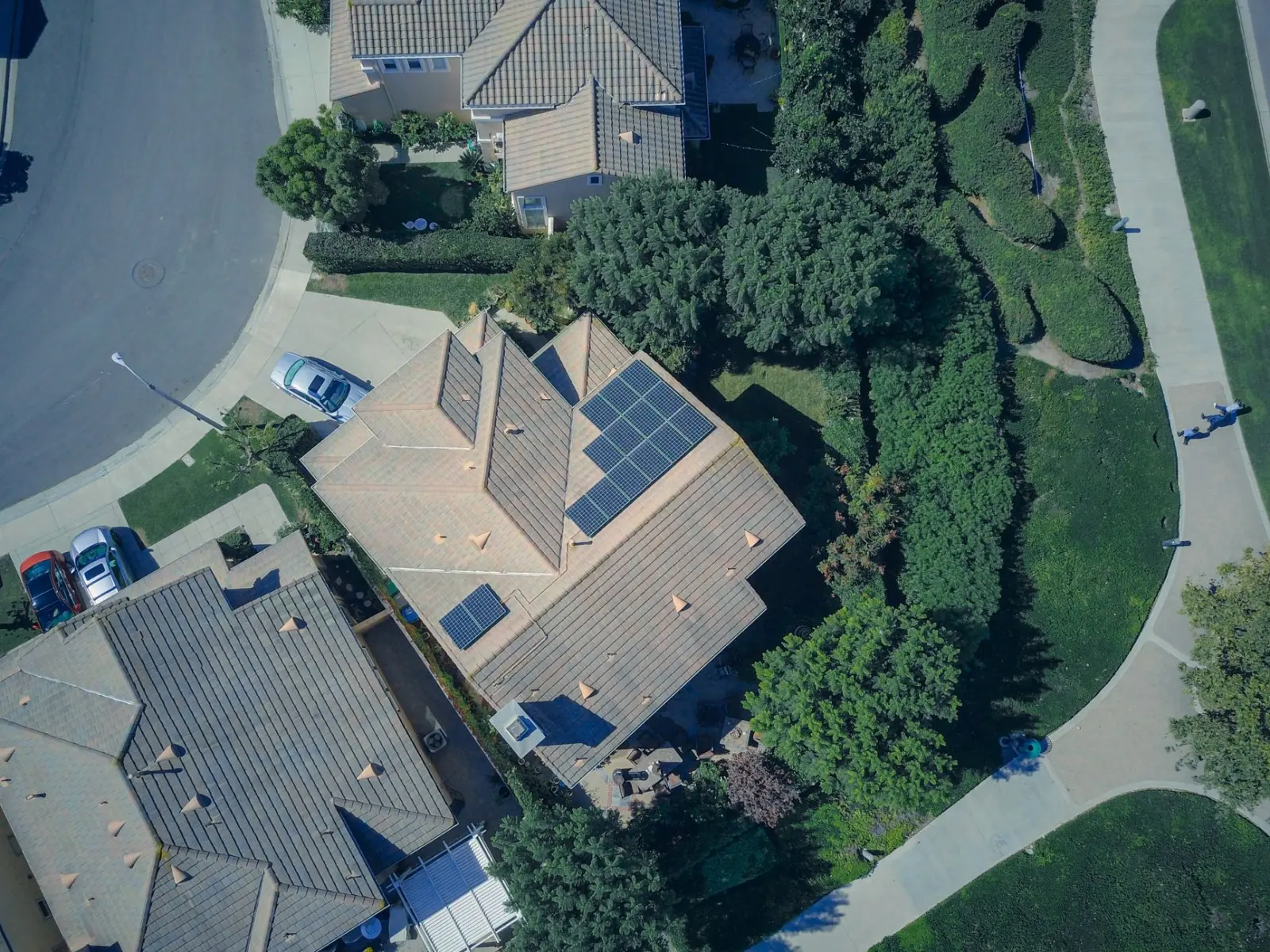
The mechanics are straightforward enough. Your solar panels generate power during the day. A battery stores excess energy when the sun is strong. Smart software monitors grid conditions and, when the grid needs support, your system can export stored energy back into the network. You get paid for that export. The grid gets a distributed source of power that responds faster than traditional generators. Everyone benefits, in theory.
What Happens at Scale
The power of a VPP emerges only when you aggregate hundreds or thousands of homes. A single 10 kWh battery is useful for a household but negligible to a grid operator. Ten thousand homes, each with a 10 kWh battery, represent 100 MWh of available storage. That’s a meaningful resource. When coordinated properly, it can respond to grid stress within seconds – faster than a coal plant can ramp up, faster than a gas turbine can start.
I’ve seen this work most visibly during peak demand periods. On hot summer afternoons, when air conditioning loads spike, the grid experiences stress. Instead of relying solely on expensive peaking plants or emergency imports, grid operators can trigger a VPP discharge. Thousands of batteries release stored energy simultaneously. The load spike flattens. Prices stabilize. Blackout risk drops. This happens quietly, in the background, without most homeowners even noticing.
The timing of these discharge events matters enormously to the economics. A VPP operator wants to discharge batteries when wholesale electricity prices are highest, because that’s when the grid is most stressed and when the compensation is best. This typically occurs in late afternoon or early evening, as solar generation drops and demand peaks. A well-managed VPP times discharges to capture these high-price windows, maximizing returns for participating homeowners.
The Real-World Experience
What I’ve observed is that homeowners often misunderstand what participation actually means. They imagine they’ll be constantly exporting power and earning money. The reality is more nuanced. Most VPP agreements involve limited discharge cycles – often just one or two per day, and only on days when the grid genuinely needs support. You’re not running your battery down completely every afternoon. You’re making it available when the grid signals a need, and that need is seasonal and unpredictable.
Battery degradation is a legitimate concern, though it’s often overstated. Lithium batteries degrade with every charge and discharge cycle. A home battery might be designed to tolerate 5,000 to 10,000 full cycles before capacity drops to 80 percent. If a VPP triggers one discharge per day, you’re looking at roughly 365 cycles per year. That’s within the design envelope, but it does mean the battery ages faster than it would if you only used it for self-consumption. Most VPP agreements compensate for this through higher energy rates, but the math varies depending on your battery chemistry, the agreement terms, and your local electricity market.
I’ve also noticed that not all homes are equally suitable for VPP participation. A household with a large battery, good solar orientation, and consistent daily generation is ideal. A home with a small battery, shading issues, or inconsistent generation is less valuable to the aggregator. Some VPP operators have minimum requirements – a 10 kWh battery, for example – which immediately excludes many older installations. This creates a two-tier system where early adopters with premium systems benefit most, while others are left out.
Grid Stability and Market Dynamics
The grid benefits from VPP participation in several ways. First, distributed batteries reduce the need for centralized peaking capacity, which is expensive and often sits idle. Second, they provide voltage support and frequency regulation – technical services that stabilize the grid moment-to-moment. Third, they defer the need for transmission and distribution upgrades by reducing peak demand on local networks. These benefits accumulate as penetration increases.
However, there are edge cases worth noting. If every home in a region discharges simultaneously, you create a new form of demand spike when the discharge ends and charging resumes. Grid operators are aware of this and stagger discharge signals, but it’s a coordination challenge that becomes more complex as VPP penetration grows. I’ve seen instances where a poorly timed VPP discharge actually created grid stress rather than relieving it, though this is rare and usually corrected quickly.
The financial model for VPP participation has also evolved. Early schemes offered fixed payments for availability – you made money simply by having a battery enrolled, whether it was used or not. Newer schemes tie payment directly to actual discharge events, which means your earnings depend on how often the grid needs support. This creates incentive alignment but also introduces volatility. A mild summer with low peak demand means fewer discharge events and lower earnings. A hot summer with multiple demand spikes means more events and higher returns.
Integration with Existing Systems
From an installation perspective, integrating a home into a VPP requires compatible hardware and software. Your inverter needs to support remote control signals. Your battery management system needs to communicate with the aggregator’s platform. Your internet connection needs to be reliable. These are not trivial requirements. I’ve encountered homes where the inverter was too old to support VPP protocols, or where the home network was unstable enough that control signals were unreliable. Retrofitting these systems is possible but adds cost and complexity.
The software layer is where most of the innovation happens. A good VPP platform balances competing interests: maximizing grid support, maximizing homeowner earnings, maintaining battery health, and ensuring the home always has adequate stored energy for its own use. It’s a multi-objective optimization problem. Some platforms are better at this than others. I’ve seen systems that prioritize grid needs so aggressively that homeowners end up with depleted batteries on hot evenings when they need air conditioning. That’s a failure of the system design, not the concept.
Regulatory frameworks are still catching up. Different states have different rules about what VPPs can do, how they’re compensated, and what protections homeowners have. Some jurisdictions allow VPPs to export energy to the wholesale market. Others restrict them to specific grid support services. These rules affect the value proposition significantly. A homeowner in Queensland might earn substantially more from the same system than someone in New South Wales, simply because the regulatory environment is more favorable.
Long-Term Viability
The sustainability of VPP models depends on several factors. Battery costs continue to fall, making participation more economically attractive. Solar penetration is increasing, which means more homes have the generation capacity to keep batteries charged. Grid operators are becoming more sophisticated at managing distributed resources. These trends are positive.
What concerns me more is the assumption that homeowners will remain patient with complex systems and modest earnings. A VPP participant might earn a few hundred dollars per year, depending on their location and battery size. That’s meaningful but not transformative. If the technology becomes more complex, or if the earnings decline as penetration increases and grid stress decreases, participation rates could drop. The economic case needs to remain compelling.
I’ve also observed that the most successful VPP schemes are those where the aggregator maintains transparent communication about what’s happening, why discharge events are being triggered, and how much money each homeowner is earning. When these details are opaque, trust erodes. Homeowners start to wonder if they’re being exploited, even if the financial arrangement is actually fair. Transparency costs nothing and builds loyalty.
Virtual power plants represent a genuine shift in how electricity grids can operate. Instead of relying solely on centralized generation and one-way distribution, grids can now leverage distributed resources that respond dynamically to real-time conditions. For Australian homes with solar and batteries, this opens an additional revenue stream and a way to contribute to grid stability. It’s not a substitute for good energy management at the household level, but it’s a meaningful addition to the energy ecosystem. The technology works. The economics work. Whether it scales to the level needed to materially transform grid operations remains to be seen.