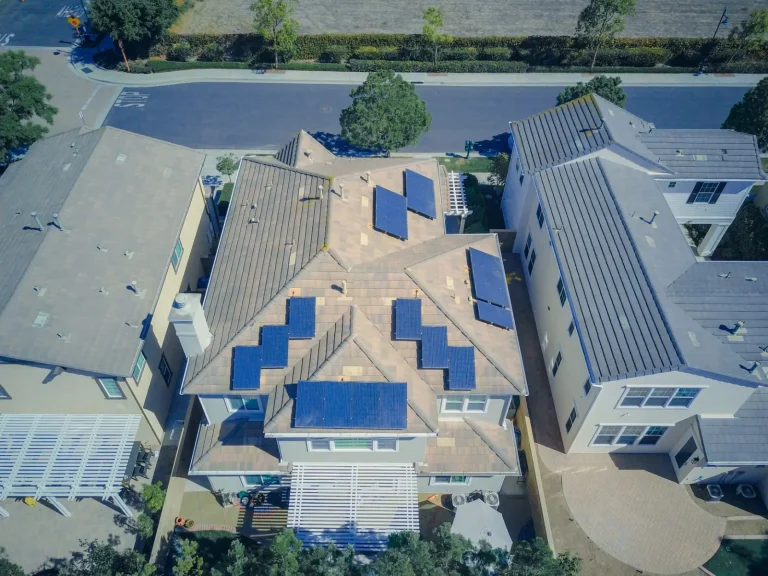

Anyone who has worked with renewable energy installations long enough learns that generation and demand rarely align. A solar array produces peak output at midday when consumption is moderate. Wind turbines spin hardest at night when fewer people are drawing power. This mismatch between when energy is produced and when it’s actually needed is the central problem that storage solves – not through magic, but through straightforward physics and engineering that becomes more apparent once you’ve watched systems operate through real seasonal cycles.
The grid itself has always relied on a form of storage: large thermal power plants that can ramp up or down based on demand. Coal and natural gas generators have inertia built into their operation. They spin continuously, and adjusting output takes minutes or sometimes hours. Renewable sources don’t work that way. A cloud passes over a solar field and output drops instantly. A wind pattern shifts and turbine generation changes within seconds. Without something to absorb or release energy during these swings, the voltage and frequency of the grid become unstable. Lights flicker. Equipment experiences stress. In extreme cases, sections of the grid can fail.
Storage technologies – primarily lithium-ion batteries in most modern installations, though other chemistries and mechanical systems exist – act as a buffer. When renewable generation exceeds demand, excess electricity charges the batteries. When generation drops below what consumers need, the batteries discharge. This happens quickly enough to smooth out the natural variability of wind and solar. The system doesn’t need to wait for a backup generator to start up. The response is nearly instantaneous.
Why Intermittency Matters More Than People Realize
The challenge of intermittency goes deeper than simple day-night cycles. Weather patterns create multi-day or multi-week periods where solar output remains low across an entire region. Winter brings shorter daylight hours. Seasonal wind patterns shift. A high-pressure system can sit over an area for days, producing clear skies and calm winds simultaneously – the worst possible combination for renewable generation. During these periods, a grid with no storage has only two options: maintain expensive backup generation capacity that runs idle most of the time, or risk insufficient power supply.
I’ve observed that most people underestimate how much storage capacity is actually needed to handle real-world variability. A battery system sized to handle a few hours of peak demand works fine for daily cycling but becomes inadequate when facing a three-day stretch of poor renewable conditions. The math changes significantly. A system designed only for daily smoothing might require four to eight times more capacity to handle seasonal variations reliably. This is why some regions are now exploring longer-duration storage technologies – compressed air, thermal storage, or flow batteries – that can hold energy for days rather than hours.
Frequency Regulation and Grid Inertia
Beyond energy volume, storage provides something equally critical: frequency support. The electrical grid operates at a specific frequency – 60 Hz in North America, 50 Hz in Europe. When demand suddenly increases or generation drops, that frequency dips. When demand falls or generation spikes, frequency rises. Large synchronous generators naturally resist these changes through their rotational inertia. A battery system can respond to frequency deviations electronically, injecting or absorbing power within milliseconds. This prevents cascading instability that could otherwise trigger blackouts.
What’s often overlooked is that this frequency regulation service has real value. Grid operators pay for it. As thermal plants retire and renewable penetration increases, the cost of frequency regulation typically rises because fewer synchronous machines exist to provide it naturally. Storage systems can be compensated for this service independently of their energy arbitrage revenue. In some markets, frequency regulation alone makes a storage system economically viable, even before considering energy time-shifting profits.
Real-World Sizing and Duration Challenges
Determining storage capacity requires understanding local generation patterns and demand profiles. A coastal region with consistent wind might need less battery capacity than an inland area with highly variable wind and solar. A grid with significant industrial load that operates on predictable schedules presents different challenges than one with residential demand that peaks in evening hours. I’ve seen installations where undersized storage created bottlenecks – the batteries charged and discharged multiple times daily, degrading faster than expected and limiting the amount of renewable energy that could be reliably integrated.
Duration is the harder variable to predict. A four-hour battery system handles most daily cycling but fails during extended cloudy periods. An eight-hour system is better but still insufficient for multi-day events. Some operators now target 12 to 24 hours of storage for critical loads, with additional seasonal storage capacity provided through different technologies. The cost per kilowatt-hour changes dramatically with duration. A four-hour lithium-ion system might cost $150 – 200 per kWh installed. A 24-hour system at the same location might cost $300 – 400 per kWh because the balance-of-system costs (inverters, controls, installation) don’t scale linearly with duration.
Integration with Grid Operations
Storage doesn’t simply sit passively waiting to absorb excess power. Modern systems integrate actively with grid control systems, responding to price signals and operator commands. During periods of high renewable generation and low demand, storage charges at favorable rates. During peak demand periods, it discharges. This arbitrage – buying low, selling high – provides revenue that helps justify the capital investment. More importantly, it creates economic incentives for storage deployment without requiring subsidies.
The control systems themselves have become sophisticated. Algorithms predict renewable generation based on weather forecasts, anticipate demand patterns, and optimize charging and discharging schedules. Some systems now use machine learning to improve these predictions. I’ve watched storage systems that were initially operated on simple rules – charge when solar peaks, discharge when demand peaks – become far more effective once predictive algorithms were implemented. The same hardware provided 15 – 20% better performance through smarter software.
There’s a practical reality that deserves mention: storage systems require maintenance and monitoring. Battery chemistry changes over time. Capacity fades gradually. Inverters age. Thermal management systems must function reliably. A storage installation isn’t a set-and-forget asset. Operators need to track state-of-charge, monitor cell voltages, manage temperature, and plan for eventual replacement. The systems that perform well are those where operations teams understand these requirements and build maintenance into their budgets from the start.
What becomes clear after years of working with renewable systems is that storage isn’t optional infrastructure for high renewable penetration. It’s fundamental. The grid’s ability to integrate wind and solar at meaningful scales depends directly on having adequate storage capacity distributed strategically across the network. The technology works. The economics are improving. The remaining challenge is deploying enough of it fast enough to match the pace of renewable installation.