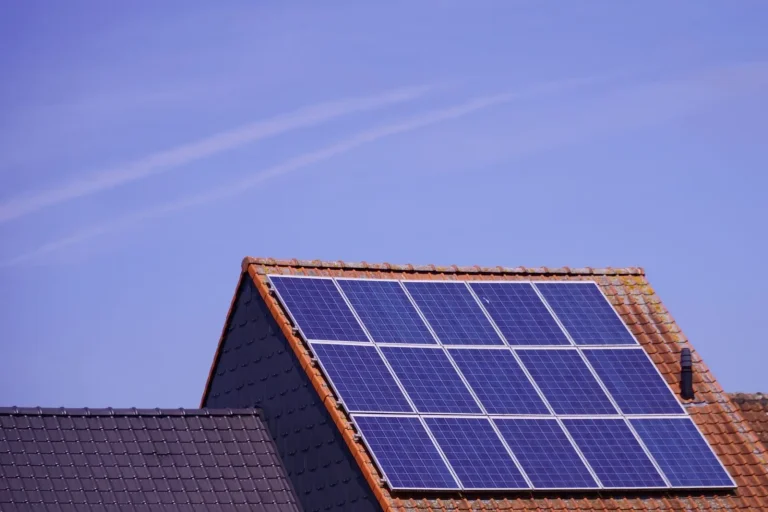


Australia’s renewable energy capacity has grown substantially over the past decade, and with it has come a real operational challenge that doesn’t make headlines the way solar panels or wind turbines do. The problem is straightforward: the sun doesn’t always shine when demand peaks, and wind doesn’t blow on a predictable schedule. Pumped hydro storage has become the backbone holding this system together, and after years of watching how it performs across different seasons and demand cycles, I can say it’s doing something that no other technology in Australia currently does at the same scale.
Pumped hydro works on a principle that’s almost deceptively simple. During periods of low demand or high renewable generation, excess electricity pumps water uphill into a reservoir. When demand spikes or renewable output drops, that water flows back downhill through turbines, generating electricity. The system is reversible, which is the key advantage. Unlike batteries that degrade with charge cycles, or fossil fuel plants that need fuel delivered constantly, pumped hydro just moves water up and down. The infrastructure lasts decades with minimal degradation.
In Australia’s context, this matters enormously. The country’s grid is geographically large and demand is concentrated in a few population centers. Solar capacity has exploded – particularly rooftop installations – creating situations where midday supply actually exceeds demand in some regions. Without storage, that energy would be wasted or curtailed. Pumped hydro absorbs that excess. Then at 6 p.m., when people come home and demand peaks while solar output drops sharply, those stored reserves come online. I’ve seen this cycle repeat consistently, and it’s become predictable enough that grid operators plan around it.
The Physical Reality of Storage at Scale
What makes pumped hydro effective in Australia is the sheer volume it can store. A typical facility holds millions of cubic meters of water across upper and lower reservoirs. The energy stored depends on the height difference and water volume – both of which are fixed once the system is built. Snowy Hydro’s Tumut 3 facility, for example, can store enough energy to power significant portions of the eastern grid for hours. That’s not theoretical capacity; it’s water sitting in a reservoir waiting to be released.
The efficiency of the round-trip process is typically 70 to 85 percent, depending on the facility’s design and age. That means if you pump 100 megawatt-hours uphill, you’ll get roughly 70 to 85 megawatt-hours back when you release it. That loss is real, but it’s still far better than letting renewable energy go unused. The alternative – curtailing wind or solar generation because there’s nowhere to put the power – wastes 100 percent of that energy.
What I’ve observed is that older facilities tend toward the lower end of that efficiency range, particularly during winter when water temperatures drop and viscosity increases slightly. Newer designs with improved turbine geometry and reduced friction losses perform better. But even a 70 percent efficient system is valuable when the alternative is grid instability or fossil fuel generation ramping up to fill gaps.
Timing and Grid Frequency Management
Beyond simple energy storage, pumped hydro provides something that’s harder to quantify but equally critical: rapid response capability. When demand suddenly spikes or a large generator trips offline, the grid frequency drops. Pumped hydro turbines can spin up from idle to full output in minutes – sometimes less. That speed is essential for preventing cascading failures. Battery systems can respond faster in milliseconds, but they can’t sustain output for hours the way pumped hydro can. Gas plants take longer to start and require fuel supply chains. Coal plants are even slower.
I’ve watched grid operators manage peak demand periods where pumped hydro was the difference between a stable system and rolling blackouts. The facility comes online, frequency stabilizes, and the crisis passes. This happens regularly during summer evenings when air conditioning demand peaks and solar output is fading. It’s not dramatic – there’s no visible sign on the grid – but it’s essential infrastructure doing exactly what it was built to do.
Seasonal Patterns and Water Availability
Australia’s climate adds complexity that doesn’t exist in some other countries with pumped hydro systems. Rainfall is seasonal and variable. The Snowy Mountains region, which feeds most of Australia’s pumped hydro capacity, can experience drought years where inflows are significantly below average. When that happens, the upper reservoir levels drop, and storage capacity effectively shrinks.
This is where the system reveals its constraints. During a dry year, pumped hydro can’t solve every problem. Grid operators have to be more conservative about when they allow the reservoirs to be drawn down. If a drought extends into summer when demand is highest, the system is stressed. I’ve seen years where careful management of reservoir levels was necessary to avoid running out of stored energy before seasonal rainfall returned.
The counterbalance is that in wet years, inflows exceed what can be stored, and water is released for irrigation and other purposes. This is actually a feature, not a bug – the system serves multiple functions. But it means pumped hydro’s availability isn’t constant. It’s a seasonal resource, and grid planning has to account for that variability.
Integration with Wind and Solar
The real value of pumped hydro emerges when you see it working alongside wind and solar generation. Wind tends to peak at night and during winter. Solar peaks at midday and during summer. Pumped hydro fills the gaps between those peaks and troughs. On a calm, overcast day in winter, wind might be weak and solar minimal. Pumped hydro can carry the load. On a hot, sunny, still afternoon in summer, solar output is high but wind is low. Pumped hydro absorbs the excess solar generation by pumping water uphill.
What I’ve noticed is that the system works best when there’s genuine diversity in renewable sources. A grid with only solar would need enormous pumped hydro capacity to handle the daily cycle. A grid with only wind would need different storage characteristics. But with both wind and solar, plus hydro, the peaks and troughs don’t align perfectly, which reduces the total storage needed.
The challenge ahead is that Australia’s renewable capacity continues to grow faster than storage capacity. New wind farms and solar installations are being built, but new pumped hydro facilities take years to plan and construct. There’s discussion of Snowy Hydro 2.0, which would add significant capacity, but it’s a long-term project. In the interim, the existing pumped hydro system is being asked to do more work than it was originally designed for, cycling more frequently and operating at higher utilization rates.
The Practical Limits
One thing that often gets overlooked in renewable energy discussions is that storage systems have physical limits. Pumped hydro can’t store unlimited energy. It can’t run indefinitely. If you have several cloudy, still days in a row, even a fully charged pumped hydro system will eventually deplete. That’s why Australia needs a mix of storage technologies – batteries for short-duration needs, pumped hydro for longer-duration storage, and possibly other approaches like compressed air or thermal storage as they mature.
The geography also matters. Pumped hydro requires suitable terrain with significant elevation differences and adequate water supply. Not every location in Australia has those characteristics. This is why most of Australia’s capacity is concentrated in the Snowy Mountains region and Tasmania. Expanding pumped hydro capacity means finding new sites, which involves environmental assessments, land acquisition, and community consultation. It’s not a quick process.
From a practical standpoint, pumped hydro is doing what it was designed to do – storing renewable energy and releasing it when needed. The system is reliable, proven, and efficient enough to justify its operational costs. It’s not perfect, and it won’t solve every grid challenge on its own. But it’s the largest storage resource Australia currently has, and it’s essential infrastructure for the transition to a renewable-dominated grid. Without it, the variability of wind and solar would be far more difficult to manage, and grid stability would be significantly more fragile than it currently is.