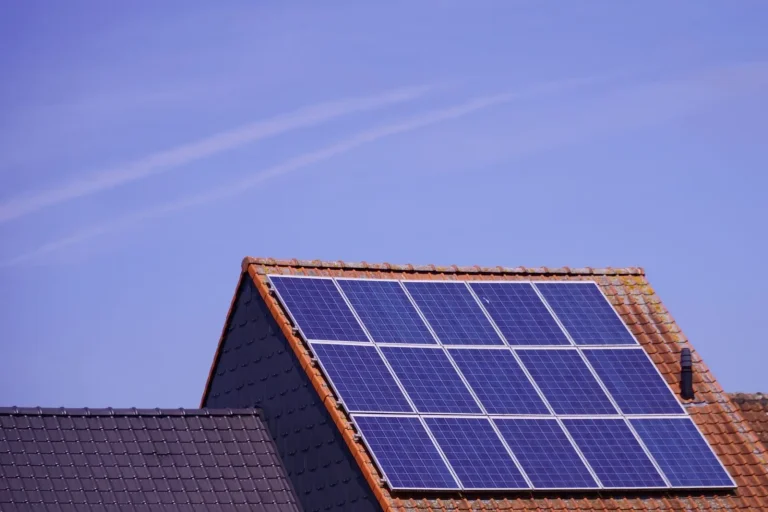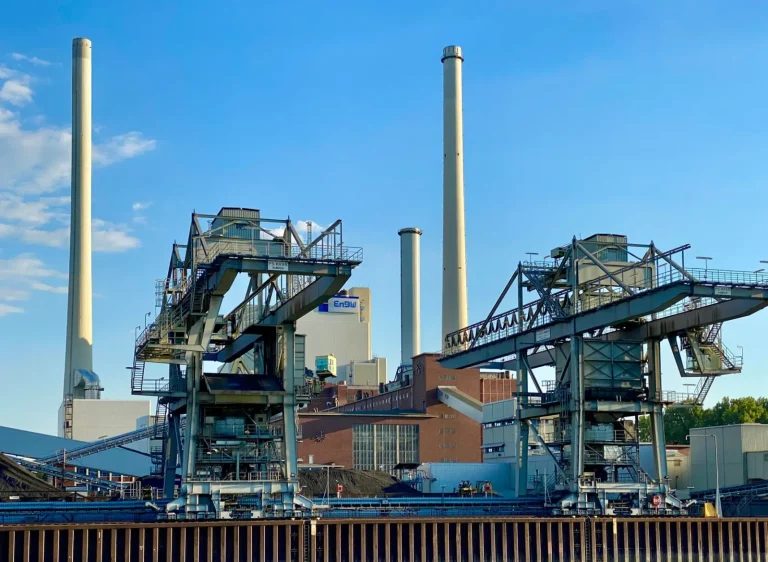


Australia’s electricity grid is experiencing a transition that looks straightforward on paper but reveals itself to be remarkably complex in practice. Over the past decade, I’ve watched the renewable energy capacity climb dramatically – solar panels on rooftops, utility-scale wind farms, and battery storage projects appearing across the landscape. The appeal is obvious: clean energy, falling technology costs, and a clear environmental direction. But what happens when you feed increasing amounts of variable generation into a network designed around predictable coal and gas baseload power is something I’ve observed firsthand through network reports, infrastructure discussions, and the practical constraints that emerge when theory meets the grid.
The core challenge isn’t whether renewables work. They do. The issue is that wind and solar generation doesn’t behave like a power station operator can control. A coal plant runs at a steady output until someone decides to ramp it up or down. A solar farm produces maximum power at noon and zero at night. Wind turbines generate when the wind blows, not when demand peaks. This variability has to be managed, and managing it across an entire national grid requires infrastructure, coordination, and real-time decision-making that Australia’s network is still building toward.
The Mismatch Between Supply and Demand
What I’ve noticed most acutely is how renewable generation often peaks when demand doesn’t. South Australia experiences this regularly. On a clear autumn day, solar output surges in the afternoon while electricity demand remains moderate. That excess power has to go somewhere. It can be stored in battery systems, exported interstate, or curtailed (essentially wasted). None of these options is ideal, and all carry costs. The grid operators face a genuine constraint: they can’t simply turn off a solar farm when it’s producing too much power, the way a gas plant operator can reduce output.
Demand, meanwhile, follows its own rhythm. Morning and evening peaks correspond to people cooking, heating, and running appliances. On hot days, air conditioning loads spike in the afternoon. On cold mornings, electric heating demand rises. These patterns are predictable to some degree, but they don’t align neatly with renewable generation cycles. The gap between what’s being generated and what’s being used creates frequency and voltage instability if it’s not managed carefully. I’ve seen network operators describe this as “ramping,” and it’s one of the most resource-intensive aspects of grid management.
Transmission Bottlenecks and Geographic Mismatch
Australia’s best wind resources are often far from population centers. The same applies to solar potential in some regions. This creates a straightforward but expensive problem: power needs to travel from where it’s generated to where it’s consumed. The transmission network – the high-voltage lines that carry bulk power across states – has finite capacity. Adding more renewable capacity doesn’t automatically add transmission capacity to match.
I’ve observed projects stall or delay because the local transmission network simply can’t accommodate the new generation without upgrades. These upgrades are capital-intensive, take years to plan and construct, and require coordination across multiple stakeholders. In some cases, new renewable projects are built but can’t operate at full capacity because the network can’t accept all the power they generate. This represents a real economic inefficiency and a constraint on how quickly the renewable transition can actually proceed.
Queensland and New South Wales have experienced this acutely. Large wind farms in inland regions need upgraded transmission lines to get their power to coastal cities where demand is highest. The infrastructure investment required is substantial, and the timeline for completion often lags behind the pace at which new generation is being installed.
Grid Stability and Inertia
One of the less visible but increasingly critical issues is something called synchronous inertia. Traditional power stations – coal, gas, hydro – have large rotating generators that provide a physical property called inertia. When demand suddenly spikes or a generator trips offline, this inertia acts like a flywheel, smoothing out frequency changes. It buys operators time to respond and rebalance the system.
Solar and wind generators, particularly when connected through power electronics (inverters), don’t provide this same inertia. As coal plants retire and are replaced by renewables, the grid loses inertia. This makes the system more sensitive to disturbances. A sudden loss of generation or a sharp demand spike can cause larger, faster frequency deviations. I’ve seen network operators describe scenarios where the grid’s frequency response becomes increasingly fragile, requiring more active management and faster-acting control systems.
Battery storage helps address this, but it’s not a complete substitute. Batteries can respond very quickly to frequency deviations and can provide synthetic inertia through advanced control systems. However, batteries have limited duration – they can only discharge for a certain number of hours before they need recharging. They’re excellent for handling short-term fluctuations and peak demand, but they can’t replace the continuous stability that a large synchronous generator provides.
Seasonal and Longer-Term Variability
Beyond daily cycles, there’s seasonal variation that complicates planning. Winter brings longer nights and often stronger winds, but lower solar output. Summer has abundant sun but sometimes calmer winds. Droughts reduce hydroelectric capacity in Tasmania and the Snowy Mountains scheme. I’ve observed years where wind resources underperform expectations, creating genuine supply gaps that have to be filled by gas generation or managed through demand reduction.
This multi-scale variability means the grid needs flexibility across different timescales. Short-term battery storage handles minute-to-minute swings. Longer-duration storage or gas plants handle daily and seasonal variations. Hydroelectric capacity, where available, provides both flexibility and storage. But not every region has access to all these options. South Australia has limited hydro, so it relies more heavily on batteries and interstate connections. Western Australia is isolated, so it must manage its own supply entirely.
The Role of Interconnection and Coordination
Interstate transmission links – connections between state grids – have become more important as renewable penetration has increased. When South Australia has excess solar, it can export to Victoria or New South Wales. When wind is strong in one region but weak in another, power can flow to balance the system. I’ve seen these interconnections operate at their limits during peak demand or when one state experiences a generation shortfall.
However, interconnections have capacity limits too. They can’t solve every problem. If multiple states experience low wind and high demand simultaneously, interstate links can’t compensate. This is why some observers argue that Australia needs either more interconnection capacity or more diverse generation sources spread geographically.
The coordination required to manage this is substantial. Network operators must forecast generation from wind and solar, predict demand, manage battery charging and discharging, and coordinate with generators and retailers. Forecasting errors can be significant, especially for wind, which is harder to predict accurately beyond a few hours ahead. I’ve seen situations where forecast errors led to rapid, expensive adjustments – bringing on gas plants quickly or paying to reduce demand.
Cost and Investment Realities
The financial side of this transition is often underestimated. The renewable generators themselves are increasingly cost-competitive with fossil fuels. But the supporting infrastructure – transmission upgrades, battery storage, grid management systems, and backup capacity – represents substantial additional investment. These costs aren’t always visible in discussions about renewable energy costs, but they’re real and growing.
I’ve observed that the cheapest renewable energy in a particular location might not be the most valuable to the grid if it requires expensive transmission upgrades or if its generation pattern doesn’t align well with demand. A solar farm in a remote area might have excellent resources but poor grid value if it can’t be connected efficiently. This creates a tension between economic optimization for individual projects and optimization for the system as a whole.
Gas plants are increasingly being retained or built not because they’re economically preferred for energy generation, but because they provide flexibility and backup capacity that the grid needs. This is a cost of the transition that’s often implicit rather than explicit in policy discussions.
Australia’s renewable transition is technically feasible and economically justified, but it’s not a simple swap of one technology for another. The grid is adapting, but the pace of adaptation is constrained by infrastructure investment timelines, coordination complexity, and the physical realities of how variable generation behaves at scale. The challenges are manageable, but they’re also substantial enough that progress will continue to be uneven across different regions and time periods.