
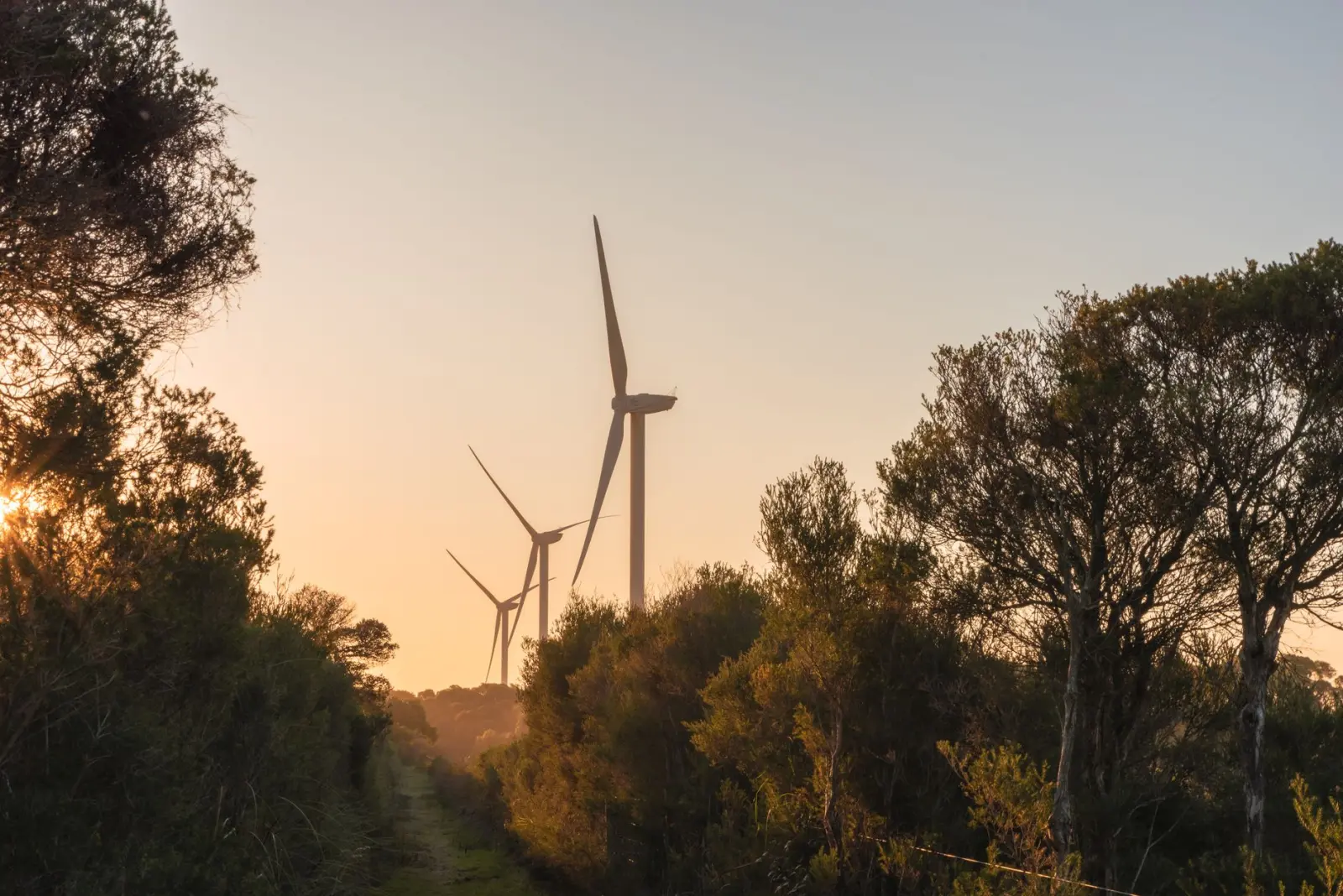
Australia’s wind energy sector has grown faster than most people realise, and the pace is accelerating in ways that create both genuine opportunities and serious friction points. I’ve watched this unfold across different regions, and what strikes me most is how quickly the conversation has shifted from “should we build wind farms” to “how do we actually integrate this much wind power into an aging electricity grid.” The growth numbers are real – wind now accounts for a meaningful share of the country’s electricity generation – but the infrastructure challenges that come with that growth are equally substantial.
The expansion itself reflects a straightforward economic reality. Wind resources in southern Australia, particularly across Tasmania, Victoria, and South Australia, are genuinely competitive with other generation sources when you account for the full lifecycle costs. Project developers have become more efficient at site assessment, permitting, and construction. Manufacturing and supply chains have matured. The technology itself has become more reliable and cost-effective. But maturity in one area doesn’t solve problems in another, and that’s where the real story gets interesting.
Grid Integration as the Binding Constraint
The electricity grid wasn’t designed to handle the variability that wind introduces at scale. This isn’t a minor technical detail – it’s the central tension shaping what can realistically be built in the next five to ten years. When wind generation drops suddenly during a lull, something else has to ramp up quickly to maintain frequency and voltage stability. Gas plants can do this, but they’re expensive to run at low capacity factors just to provide backup. Battery storage helps, but the installed capacity remains tiny relative to what would be needed to smooth out a full day of low wind conditions across a region.
I’ve seen projects delayed or scaled back specifically because transmission infrastructure couldn’t accommodate them. A large wind farm in a remote area might be economically sound and have excellent wind resources, but if the nearest transmission line is already at capacity and upgrading it takes five years and hundreds of millions of dollars, the project sits idle. This isn’t bureaucratic obstruction – it’s a real physical constraint. Transmission lines have thermal limits. You can’t just push more electrons through them without risk of failure.
The National Electricity Market operator has become more sophisticated about forecasting wind output and managing the grid accordingly, but there are hard limits to what software and operational skill can overcome. On days when wind output across multiple regions drops simultaneously, the system becomes stressed. Demand response, interconnection improvements, and battery storage all help, but they’re being deployed incrementally while wind capacity is growing rapidly. That mismatch creates genuine bottlenecks.
Supply Chain and Manufacturing Realities
The global wind turbine supply chain tightened significantly after 2020, and Australia felt that squeeze acutely. Major manufacturers – Vestas, GE, Siemens Gamesa – have long lead times on turbine orders. Blade production became a bottleneck. Shipping costs for large components fluctuated wildly. I’ve worked on projects where turbines were ordered 18 months in advance, and even with that long lead time, delivery slipped by months. That cascades through the entire project timeline and can push costs up substantially.
There’s been talk of local manufacturing for years, and some components are now made in Australia, but building a full turbine manufacturing facility requires significant capital and a guaranteed market. The local market alone isn’t large enough to justify that investment, so manufacturers have remained cautious. This means Australia remains dependent on imports, which creates vulnerability to global supply disruptions and currency fluctuations. A weak Australian dollar makes turbines more expensive. A strong dollar helps, but that’s not something anyone can control or plan around reliably.
Land Use and Community Acceptance
Wind farms occupy large geographic areas, and not all of that land is equally suitable or equally accepted by the people who live nearby. The best wind resources in Australia tend to be in rural areas with existing agricultural use. Farmers can and do lease land for turbines – the rental income is often attractive – but community opposition in some regions has become more organized and vocal. Noise concerns, visual impact, and property value worries drive much of this resistance, even though the evidence on property values is mixed and noise standards are enforceable.
What I’ve observed is that acceptance varies enormously depending on how projects are developed and communicated. Communities that feel consulted early and genuinely heard tend to be more supportive, even if they have concerns. Communities that feel projects are being imposed on them become adversarial. Local council opposition can slow or block projects even when state-level policy is supportive. This isn’t just a social issue – it directly affects project viability and timeline.
Indigenous land rights have also become more prominent in development discussions, which is appropriate but adds another layer of negotiation and complexity. Several projects have been modified or relocated based on Indigenous heritage concerns. This slows things down, but it also reflects a legitimate shift toward more inclusive decision-making.
Market and Policy Uncertainty
The investment environment for wind energy in Australia has become less stable than it was even five years ago. Renewable energy policy at the federal level has shifted multiple times. State-level policies vary significantly. The Renewable Energy Target has provided some certainty, but there’s ongoing debate about what happens after 2030. Investors need predictable policy frameworks to commit capital for projects that take years to develop and decades to operate. Uncertainty makes financing more expensive and makes developers more cautious about committing to new projects.
The wholesale electricity price has also become more volatile. High wind generation in some periods drives prices down, which is good for consumers but can make project economics marginal. Low wind periods drive prices up. This volatility makes it harder to forecast returns accurately. Some developers have responded by pursuing power purchase agreements with large consumers, which lock in revenue and reduce price risk, but not all projects can secure these agreements.
Fossil fuel generators have also pushed back against wind expansion in various forums, framing it as unreliable or as a threat to baseload generation. This rhetoric influences policy discussions and public perception, even though the technical evidence is more nuanced. Wind is variable, not unreliable, and baseload generation is becoming less critical as battery storage improves. But the narrative matters for policy, and it’s created headwinds for expansion in some regions.
Where Growth Is Actually Happening
Despite these constraints, wind capacity continues to grow. South Australia has become a genuine leader, with wind providing a large share of its electricity. Victoria has accelerated significantly. Tasmania has enormous untapped potential, though transmission constraints limit how much of that potential can be realized quickly. New South Wales is developing more capacity, though it started from a lower base. Western Australia has good resources but faces different constraints related to its isolated grid.
The projects that move forward most smoothly tend to share common characteristics: they’re in regions with existing industrial or agricultural infrastructure, they have strong community engagement, they’re backed by developers with experience and capital, and they secure long-term power purchase agreements. Projects that lack one or more of these elements face delays and cost overruns.
Battery storage is emerging as a genuine enabler for wind expansion. As battery costs continue to fall and installations increase, the variability problem becomes less acute. This creates a virtuous cycle where more wind becomes viable, which drives more battery investment, which enables even more wind. But we’re still in the early stages of that cycle, and battery manufacturing capacity remains a constraint.
The realistic picture is one of continued growth but not at the pace that pure resource availability would suggest. Australia has excellent wind resources and a genuine economic case for wind energy. The sector has matured considerably. But grid infrastructure, supply chains, community acceptance, and policy stability all act as brakes on expansion. Developers who understand these constraints and navigate them systematically move projects forward. Those who underestimate them encounter delays and cost escalation. The opportunities are real, but they’re bounded by practical realities that don’t make headlines but determine what actually gets built.