
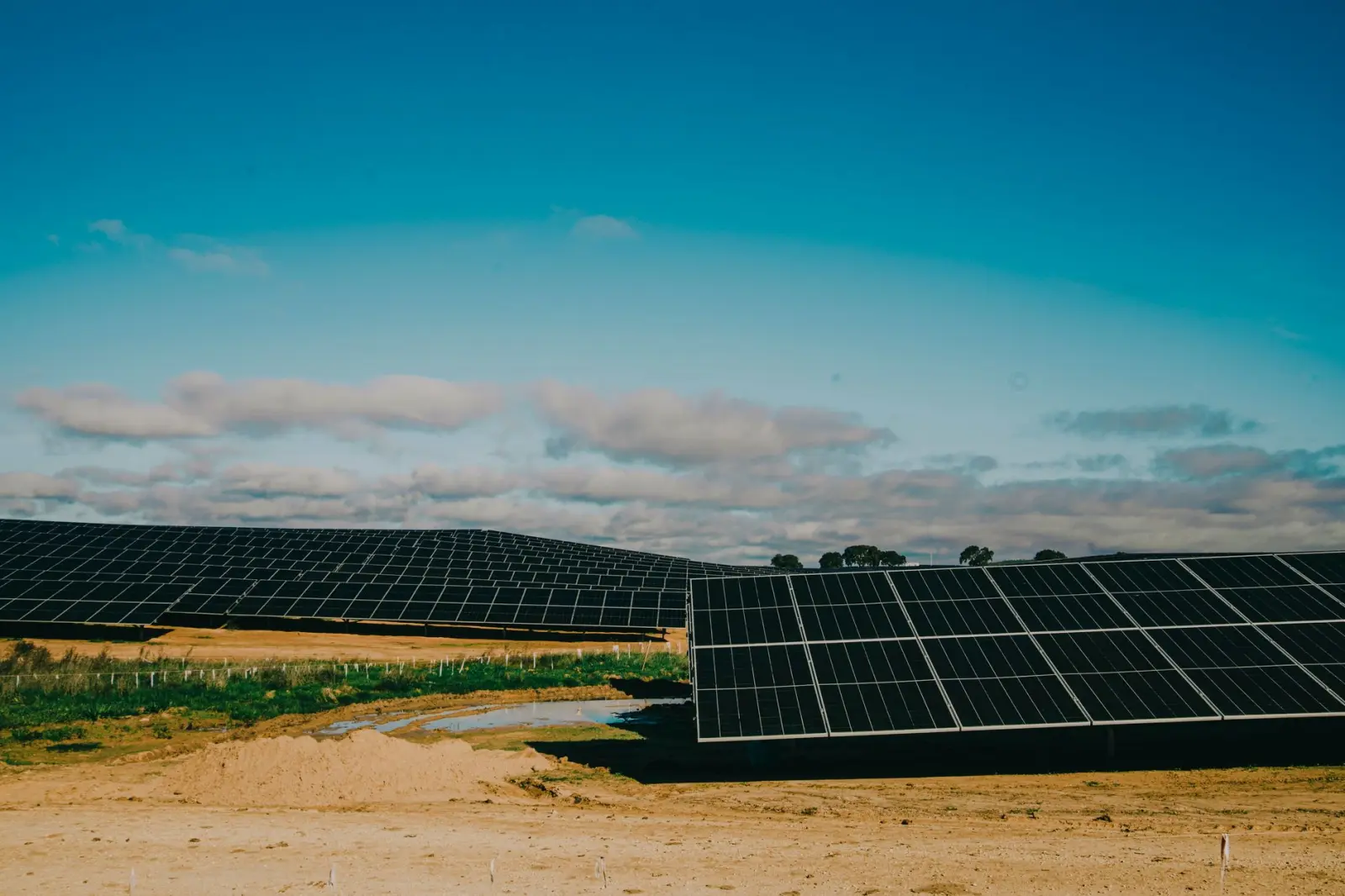
Australia’s renewable energy zones are a practical response to a genuine problem: solar and wind farms work best in specific geographic locations, but those locations often sit far from where people actually use the power. The zones themselves aren’t new infrastructure or protected areas. They’re designated regions where the government, utilities, and developers have agreed to coordinate investment in both generation capacity and the transmission lines needed to move that power to demand centers.
I’ve watched this system develop over several years, and it’s worth understanding what it actually solves. Without coordination, you end up with scattered solar and wind installations that overwhelm local grid connections, creating bottlenecks. Developers build in areas with good resources but poor transmission access, and then everyone waits years for network upgrades. The zones flip this around: identify where generation makes sense, plan the transmission infrastructure first, then invite development into that framework.
The approach isn’t perfect, but it’s more efficient than the alternative. When I look at how other regions handle renewable deployment, the lack of coordination creates real friction. Developers guess at grid capacity, utilities scramble to upgrade networks after the fact, and customers end up paying for inefficiency.
Where the zones actually exist
Australia’s renewable energy zones aren’t scattered randomly. They’re concentrated in regions with strong wind or solar resources and where transmission corridors can realistically be built. The main zones cluster in inland New South Wales, parts of South Australia, western Victoria, and Queensland. These aren’t small areas – they’re substantial regions where multiple projects can coexist.
The reasoning is straightforward. Wind resources in inland NSW are reliable and strong. Solar output in inland areas avoids coastal cloud patterns. These zones also happen to sit on or near existing transmission routes, which keeps upgrade costs manageable. A zone in the middle of a populated city wouldn’t work; a zone in an area with poor wind and no transmission access wouldn’t either.
What surprised me when I started looking into this was how much the zones depend on existing infrastructure. The government didn’t invent new transmission corridors from scratch. They identified where existing lines could be upgraded and where new lines made economic sense, then drew the zones around that reality. That’s pragmatic planning, even if it’s less visible than it sounds.
How coordination actually functions
The zones create a framework for developers, network operators, and government to work toward the same timeline. A developer proposing a solar or wind farm inside a designated zone knows that transmission upgrades are planned and funded. They’re not gambling on whether the grid can handle their output. Network operators can plan upgrades knowing roughly how much generation capacity will arrive and when. Government can prioritize funding for transmission infrastructure that serves multiple projects rather than reacting to individual applications.
This sounds bureaucratic, but the alternative is worse. Without zones, a developer might build a 100-megawatt wind farm in a location with excellent resources, only to discover the local grid connection can only handle 40 megawatts. The farm sits partly idle, the developer loses money, the utility scrambles to upgrade, and the customer eventually pays for the inefficiency through higher network charges.
I’ve seen this happen in regions without coordinated planning. Projects get built, then transmission upgrades lag by years. The mismatch between generation and grid capacity creates real problems: voltage instability, curtailment (where renewable generators have to shut down because the grid can’t accept their output), and expensive emergency upgrades.
Transmission planning inside the zones
The transmission side of the zones is where most of the actual work happens. Upgrading or building new transmission lines is expensive, slow, and politically complicated. A single major transmission corridor can take five to ten years from planning to operation, and it might cost hundreds of millions of dollars.
The zones allow utilities to plan these upgrades with some confidence about future demand. Instead of building a line that might serve one or two projects, they can design it to handle multiple farms over time. That spreads the cost across more users and makes the investment more defensible. It also means individual projects don’t have to bear the full cost of transmission infrastructure, which keeps renewable energy economically viable.
That said, transmission planning remains contentious. New lines cross private land, affect visual amenity, and disrupt existing communities. The zones don’t eliminate these issues, but they do make the case for investment clearer. When a transmission upgrade serves five planned projects rather than one, the argument for proceeding is stronger.
What happens when zones overlap with reality
The zones work reasonably well when conditions align: good resources, accessible land, and existing or planned transmission routes. But real projects always involve complications that the zone maps don’t capture.
A developer might find that the best site for a solar farm sits just outside the designated zone, in an area where transmission capacity is limited. They can still build there, but without the coordinated transmission planning that comes with being inside a zone. Alternatively, a site inside a zone might face environmental constraints, indigenous heritage issues, or landowner objections that slow or prevent development.
The zones are also static in a sense. They’re drawn based on current understanding of resources and transmission, but technology changes. Solar panel efficiency improves, wind turbine heights increase, and battery storage becomes viable in new locations. A zone that made sense five years ago might not be the optimal choice today. The system does get reviewed and updated, but there’s always a lag between changing conditions and policy response.
I’ve watched projects struggle because they’re caught between the zone framework and practical realities. A developer with a good site and willing landowners might face delays because transmission upgrades are scheduled for a different zone. The coordination that the zones provide also creates dependency: if transmission upgrades slip, all the projects waiting for that infrastructure slip as well.
Grid stability and the zone approach
One reason the zones matter for stability is that they allow the grid operator to anticipate where variable generation will come from. Solar and wind output fluctuates, and the grid needs to balance supply and demand constantly. When generation is scattered randomly, balancing becomes harder. When it’s concentrated in known zones with planned transmission, the operator can prepare.
The zones also encourage diversity. Multiple wind farms in different locations experience different wind patterns. Solar farms spread across a region see different cloud cover. This natural diversity helps smooth out the variability that would occur if all generation came from one location. The zones are large enough that this diversity effect is real.
Battery storage is increasingly important here too. As more storage capacity gets built, often co-located with generation in the zones, the system can store excess output and release it when needed. The zones provide a framework for coordinating both generation and storage investment.
Australia’s renewable energy zones represent a shift from ad-hoc project-by-project development toward coordinated regional planning. They’re not a perfect solution, and they don’t eliminate the complexity of integrating renewable energy into a grid that was built for coal and gas. But they do address a real problem: the mismatch between where renewable resources are best and where grid infrastructure exists. That coordination, unglamorous as it is, makes the system work more efficiently than it otherwise would.